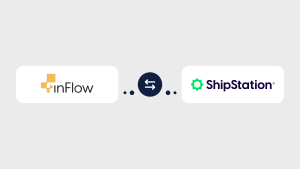
For small and midsize businesses juggling inventory and shipping, every manual data entry is a risk of error and wasted time. That’s the problem inFlow Inventory’s new direct integration with ShipStation aims to solve, announced today from Toronto, Ontario, Canada.
Fully picked orders flow to ShipStation and tracking flows back to inFlow, so sellers keep the shipping tool they already use and stop re-entering orders.
TORONTO, ONTARIO, CANADA, November 26, 2026 /EINPresswire.com/ — inFlow Inventory, a cloud-based inventory management software for small and midsize businesses, has launched a direct integration with ShipStation, the shipping platform many online sellers use to print labels and compare carrier rates. The integration sends orders from inFlow to ShipStation when they are picked and writes carrier, tracking number and ship date back to the inFlow sales order when they ship.
Also worth a look: Cross-linking agent market set to hit $13.53 billion by 2030 as construction and EV demand surge and Corporate training market hits $410B as AI upskilling becomes a job security necessity.
Previously, sellers using both tools had to either re-enter orders manually or rely on a third-party connector like Zapier. That extra step is now eliminated, allowing inFlow to maintain accurate stock counts while ShipStation handles the logistics of labels and carrier selection.
What the inFlow and ShipStation integration does:
- Sends orders to ShipStation automatically. Once an order is fully picked in inFlow, it appears in ShipStation’s Awaiting Shipment queue with its items, quantities, SKUs and ship-to address.
- Brings tracking back. When the order ships in ShipStation, inFlow updates the sales order with the carrier, tracking number, ship date and packed items. Multi-box orders show each box with its own tracking number.
- Keeps your shipping setup. Teams keep ShipStation’s carrier rates, automation rules and label printing. inFlow does not choose a carrier or service.
- Records label costs. Admins can log ShipStation label costs on the sales order in inFlow as a non-customer cost or as freight.
- Updates connected stores. Tracking added to the inFlow order passes to stores such as Shopify, like any other inFlow shipment.
Who the ShipStation integration is for:
The integration is built for ecommerce, wholesale and direct-to-consumer businesses that already ship with ShipStation and sell on channels such as Shopify, WooCommerce and Amazon.
Availability and pricing:
The ShipStation integration is available now in inFlow Inventory. Admins connect with a ShipStation V2 API key in inFlow’s integration settings, and the setup guide has the steps. A ShipStation account is required and billed separately by ShipStation. For more details, visit the inFlow ShipStation integration page.
Maya Garvey
inFlow Inventory
Visit us on social media:
LinkedIn
Instagram
Facebook
YouTube
TikTok
X
Why it matters: For growing ecommerce and wholesale businesses, eliminating manual data transfer between inventory and shipping systems can reduce errors and speed up fulfillment. This integration directly addresses a common friction point, allowing sellers to scale operations without adding administrative overhead.