High-mix discrete assembly operations often hit a wall when a single parts feeder cannot keep pace with a robot or handle widely different component shapes. A new analysis from automation manufacturer FIDER argues that a parallel feeding architecture — multiple independent vibrating platforms serving one robotic workspace — can remove that bottleneck, and the company is laying out the engineering case for operations leaders weighing the investment.
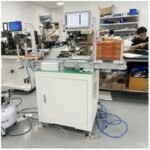
Feeding multiple dissimilar components into a single robotic assembly station at the same time is a routine demand in high-mix production. The Parallel Flexible Feeder System addresses the material delivery constraints that arise when one feeder cannot match robotic pick capacity or cope with diverse part geometries. Automated cells building connectors, sensors, or medical devices frequently need two or more distinct subcomponents. A solitary feeder forces compromises on vibration frequencies, causes part starvation, and brings production to a halt during batch changeovers. By examining multi-station parallel feeding architecture, operations leaders can judge whether parallel feeding delivers the agility and uptime that high-mix small-parts manufacturing requires.
How the architecture works
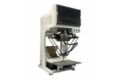
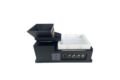
In a parallel flexible feeding setup, two or more independent multi-axis vibrating feeding platforms share a single robotic workspace. Rather than pushing varied component shapes onto one vibrating surface, the system assigns individual feeding units to specific component types and places them side by side beneath an overhead manipulator.
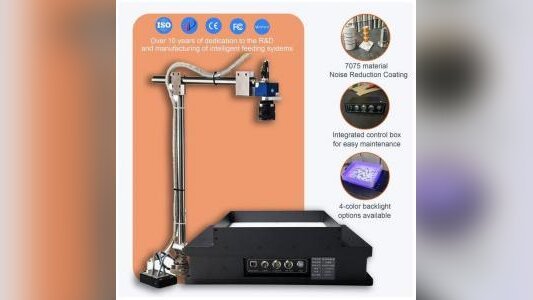
Several engineering layers are built into the architecture: – Independent multi-axis vibration platforms driven by dedicated voice-coil or electrodynamic actuators, which tune agitation frequencies to the mass of each component. – Segregated optical inspection zones, using either dedicated overhead cameras per platform or one wide-field-of-view sensor with split illumination channels. – Independent bulk storage hoppers that refill individual feeder trays based on discrete optical density measurements. – A centralized programmable logic controller that coordinates robot trajectory planning across every active feeding zone.
This parallel arrangement decouples mechanical feeding parameters across components, so heavy metal stampings and featherweight plastic clips can feed at the same time without interfering with each other.
Multi-component assembly without part starvation
Many precision assembly tasks combine two or more distinct parts — pressing stamped metal contact terminals into molded plastic connector housings, for instance. In a traditional single-feeder cell, feeding multiple part geometries means batch kitting on separate lines or cycling different parts through the feeder one after another, which requires intermediate buffer conveyors.
A Parallel Flexible Feeder System simplifies multi-part assembly right at the primary workstation: – Feeder Platform A continuously presents plastic connector housings under tailored vibration parameters. – Feeder Platform B simultaneously disperses delicate stamped metal contact pins on an adjacent antistatic tray. – A single high-speed Delta robot or dual-arm gantry retrieves a housing from Platform A, seats it in an assembly fixture, and immediately retrieves multiple contact pins from Platform B to complete insertion. – Both components feed in real time at their natural optimal presentation rates, eliminating WIP buffer racks and intermediate conveyor loops.
Synchronizing material presentation directly within the robot operating envelope shortens total assembly intervals and maintains steady cell production between 50 and 75 assemblies per minute.
Overcoming the asymmetric depletion bottleneck
Multi-component assembly frequently runs into asymmetric part consumption, where a product design calls for unequal quantities of subcomponents. An automotive sensor assembly, for example, may consume four contact pins for every single outer housing. In a shared feeding mechanism, that imbalance quickly starves the robot of high-ratio components or floods the vision zone with unpicked low-ratio parts.
Parallel feeding resolves the asymmetric depletion dilemma through independent control loops: – Platform A vibrates at a gentle frequency to orient a single housing every two seconds. – Platform B operates at a rapid, high-frequency agitation rate to present four terminal pins per second, matching the higher consumption ratio. – Bulk hopper replenishment triggers independently for each station, preventing excess part accumulation on low-consumption trays while maintaining dense presentation on high-ratio surfaces. – Machine vision systems process independent coordinate queues, allowing the robot motion planner to prioritize high-ratio component retrieval without stalling.
Deploying a Parallel Flexible Feeder System eliminates material starvation, ensuring that uneven part ratios never limit total assembly line throughput.
Zero-downtime product changeovers
In high-mix, low-volume manufacturing environments, production lines switch between product variants multiple times per shift. Conventional single-feeder cells require complete line stoppages to purge components and retool guide tracks; a parallel architecture enables non-stop, zero-downtime batch changeovers.
The alternating changeover workflow runs in a coordinated sequence: – While Feeder Platform A continues feeding components for active production batch variant one, an operator pre-loads the next production recipe into Feeder Platform B. – Platform B purges remaining components into a collection drawer using automated forward sweeps and loads raw parts for batch variant two from its bulk hopper. – When production batch variant one finishes, the master controller switches the robot pick window from Platform A to Platform B in milliseconds. – Production continues without a single second of line downtime, while Platform A is purged and prepped for the subsequent product run.
This alternating workflow recovers hours of lost production time every shift, maximizing overall equipment effectiveness on agile assembly lines.
Operational redundancy and maintenance resilience
Automated manufacturing lines are vulnerable to single-point equipment failures that can halt an entire production facility. A parallel feeding configuration provides built-in operational redundancy, enhancing cell resilience during routine maintenance and unexpected component jams.
Key maintenance and reliability advantages include: – Redundant operation mode: If one feeder requires routine tray cleaning, optical recalibration, or mechanical adjustment, the cell can switch into single-station mode, maintaining fifty percent production capacity rather than shutting down completely. – Modular quick-release trays: Agitation plates feature tool-free quick-disconnect clamps, allowing technicians to swap surface plates in under sixty seconds during scheduled servicing. – Isolated vibration dampening: Individual feeder chassis incorporate independent elastomeric shock mounts, preventing harmonic vibration transfer from an active feeder to an idling neighbor. – Segregated pneumatic vacuum lines: Dedicated vacuum generator circuits ensure that a seal failure on one end-effector circuit does not compromise gripping pressure on adjacent tooling.
This fault-tolerant architecture minimizes unscheduled production downtime, protecting manufacturing schedules against component feeding interruptions.
Capital investment and production scale evaluation
Deciding between a single flexible feeder and a parallel multi-station system requires evaluating product mix complexity, production volume, and capital payback periods. Single-feeder workstations remain the most cost-effective choice for dedicated assembly lines running one or two component geometries with infrequent changeovers.
Conversely, a Parallel Flexible Feeder System is justified under specific operational conditions: – Assembly processes requiring simultaneous insertion of two or more distinct subcomponents within a single robotic station. – Production facilities managing ten or more distinct product variants with daily or shift-level changeovers. – Cleanroom environments where floor space is at a premium and consolidating multiple feeding operations under a single robot frame saves expensive facility square footage.
Automation manufacturers like FIDER engineer parallel flexible feeding workstations that combine dual multi-axis vibration platforms, integrated optical vision, and high-speed Delta robotics into a unified industrial cell. These modular systems achieve placement tolerances of ±0.05 mm while providing the agility required for demanding high-mix production. Evaluating part geometry diversity and changeover frequency ensures that your automation investment delivers long-term operational returns. To explore parallel feeder system configurations or discuss multi-part assembly integration for your facility, review detailed technical specifications at https://www.fdrautomation.com/ to schedule an engineering consultation.
FIDER
FIDER
Also worth a look: Flexible Feeder vs. Vibrating Bowl: The Changeover Math That Decides and FIDER urges buyers to look past spec sheets when choosing desktop pick-and-place robots.
Why it matters
As manufacturers shift toward higher product mixes and shorter runs, feeding bottlenecks increasingly determine whether an automated cell pays off. FIDER’s case suggests that parallel feeding is less a niche upgrade than a structural answer to changeover downtime and uneven part consumption — two problems that conventional single-feeder cells cannot solve without buffers or stoppages.