Commercial kitchens live and die by their hardware — a warped pan or a leaking lid can disrupt service, waste energy, and compromise food safety. That’s why the choice of Gastronorm (GN) containers, standardized under European EN 631 specifications, matters far beyond simple dimensions. While the 530 by 325 millimeter 1/1 module provides a common sizing grid across steam tables, refrigerators, and transport cabinets, the open B2B market offers pans that vary dramatically in construction quality, material grade, and lifespan. Jiangmen Pengjiang District Daosheng Stainless Steel Co., Ltd., operating under the brand Betonway, is positioning itself as the premium OEM alternative to these standard-issue utility pans.
Purchasing managers frequently discover that two food pans with identical length and width markings behave very differently under real-world stress. Heat transfer, structural integrity, and service life can all diverge sharply between products that look the same on a spec sheet. As a specialized OEM manufacturer of heavy-duty stainless steel GN containers, Betonway builds commercial kitchenware intended to close the gap between basic catalog dimensions and the punishing demands of high-volume food service operations.
Standard market containers: the baseline
Also worth a look: Tuofa takes solar bracket project from prototype to repeat production and Free tutoring site exposes the reasoning behind every 11+ and SATs answer.
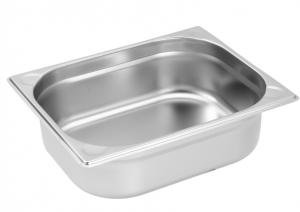
Off-the-shelf GN containers from general supply channels conform to uniform exterior dimensions so they fit standard rack slots and well cutouts. Entry-level options typically feature electropolished surfaces, anti-jamming stacking lugs, and simple stamped volume markings along the interior walls. These utility pans are produced to fixed factory specifications and distributed as ready-to-ship inventory for general catering use.
However, in these baseline alternatives, wall thickness and edge curling profiles are often adjusted to hit target price points rather than to withstand demanding operational stresses. Manufacturers commonly use Grade 201 or basic Grade 304 stainless steel sheets drawn through conventional mechanical stamping dies. While these pans meet basic storage requirements, minor dimensional variances can appear across different production batches. Fluctuations in sheet metal thickness or corner bend radii affect how tightly pans nest or sit within steam table cutouts. Over extended thermal cycling, lighter-gauge rims may gradually warp, compromising steam containment and impairing uniform heat distribution during prolonged hot-holding.
Betonway’s engineering and product range
For kitchens that demand more, Betonway maintains a broad portfolio of heavy-duty Gastronorm containers and specialized lid assemblies. The product line, developed by Jiangmen Pengjiang District Daosheng Stainless Steel Co., Ltd., includes full-size 1/1, 1/2, 1/3, 1/6, and 1/9 GN pans in standard depths from 20 millimeters up to 200 millimeters. The lineup also includes matching stainless steel covers with heat-resistant handles, recessed lifting grips, and food-grade silicone sealing rings designed to prevent spills during transport.
Betonway uses high-grade food 304 stainless steel as its core raw material. The metal surface undergoes controlled mechanical brushing and electrochemical finishing to produce a clean finish that minimizes food adhesion and simplifies sanitization. Specialized variants include perforated steam pans with precise hole arrays for uniform steam circulation in high-pressure convection units. Engineered impact corners strengthen high-stress points, preventing structural denting during heavy handling or frequent commercial dishwasher cycles.
Production precision and consistency
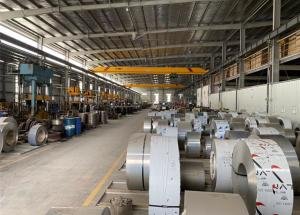
The structural performance gap between standard commercial pans and specialized OEM units comes down to factory tooling precision and process management. Jiangmen Pengjiang District Daosheng Stainless Steel Co., Ltd. operates a 30,000 square meter manufacturing facility backed by over thirty years of metalworking experience. Maintaining tight dimensional tolerances across multi-thousand-unit production runs requires dedicated quality controls throughout drawing, trimming, and finishing operations.
Betonway implements automated tool wear compensation protocols on its deep-drawing presses. As stamping dies gradually wear over thousands of press cycles, operational parameters are recalibrated to keep wall thickness within strict engineering tolerances. Laser positioning systems verify edge alignment before rim trimming, while post-weld hydraulic straightening fixtures preserve rim flatness on handled covers and specialized trays.
This precision yields immediate operational benefits in commercial settings:
- Smooth, uniform rim edges prevent steam leakage around steam table cutouts, preserving holding temperatures and reducing burner energy consumption.
- Consistent corner geometry allows smooth nesting without jamming, letting kitchen staff pull individual pans quickly from storage stacks during peak hours.
- Stable rim dimensions ensure a tight seal with silicone-gasket lids, reducing spills during off-site catering transport.
By eliminating batch-to-batch structural variation, Jiangmen Pengjiang District Daosheng Stainless Steel Co., Ltd. gives commercial buyers reliable hardware that integrates seamlessly into existing prep lines and automated cleaning systems.
Operational value and long-term efficiency
For catering firms, hotel kitchens, and food service equipment distributors, container selection directly influences replacement frequency, maintenance expenses, and daily labor productivity. Standard market pans offer an accessible entry point for lower-intensity applications, but frequent warping, rim binding, or surface corrosion often leads to higher cumulative replacement costs. Investing in premium stainless steel GN containers helps operators maintain food safety standards, improve energy efficiency, and streamline kitchen workflow.
Betonway offers tailored OEM and ODM manufacturing services, allowing commercial buyers to specify raw material gauges, custom brand embossing, specialized handle configurations, or modified rim profiles for proprietary food service equipment. Backed by comprehensive manufacturing infrastructure, modern stamping machinery, and controlled quality processes, Jiangmen Pengjiang District Daosheng Stainless Steel Co., Ltd. delivers consistent metalware built for demanding commercial service.
Through dedicated engineering, precise material sourcing, and flexible production capabilities, the company supports global commercial kitchens with dependable hardware that lowers total cost of ownership while maximizing day-to-day utility across diverse culinary environments. For comprehensive product specifications, custom OEM manufacturing consultations, or sample requests, visit www.betonwaykw.com.
Why it matters: The choice between commodity GN pans and precision-engineered alternatives is not just about upfront price — it directly affects energy use, food safety compliance, and replacement cycles in commercial kitchens. As operators face rising costs and tighter margins, investing in durable, consistently manufactured containers can meaningfully reduce long-term operational expenses.
Betonway
Jiangmen Pengjiang District Daosheng Stainless Steel Co.