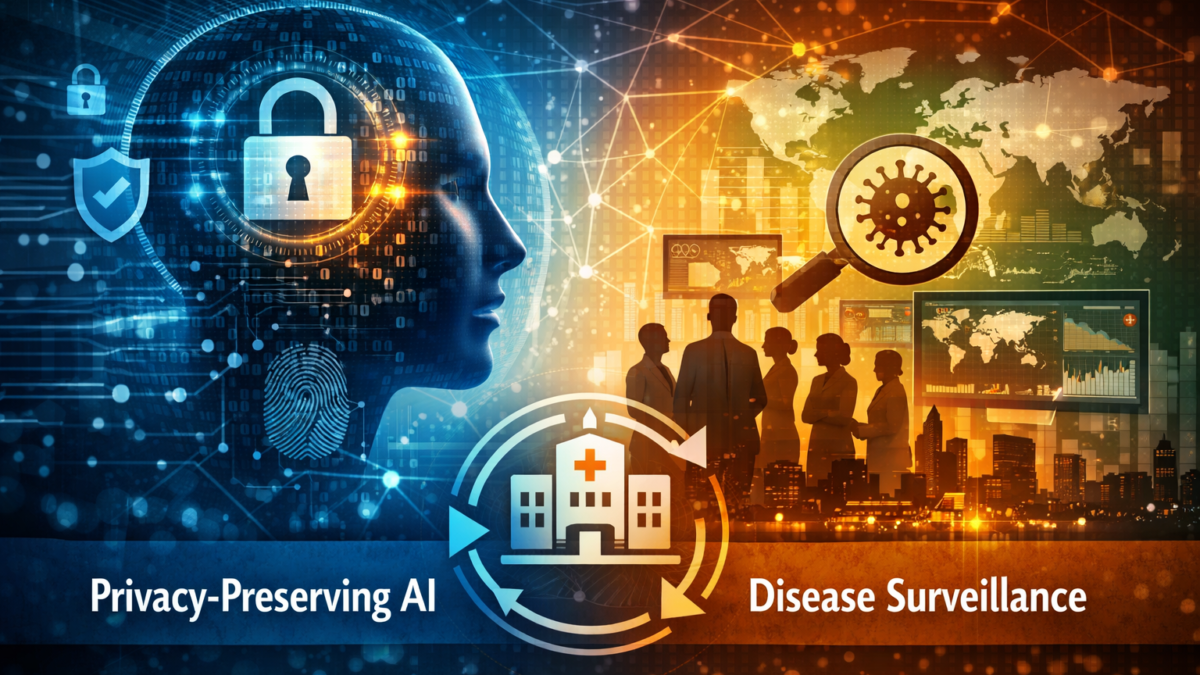
In an era where artificial intelligence increasingly shapes critical decisions in healthcare and public safety, computer scientist Vijayalaxmi Methuku is emerging as a leading voice in ensuring these powerful technologies serve humanity responsibly.
Vijayalaxmi has published two groundbreaking research papers that address urgent challenges at the intersection of technology, ethics, and public health — work that experts say could reshape how AI systems are designed and deployed worldwide.
Tackling AI’s Privacy Crisis
In her study “Bridging the Ethical Gap: Privacy-Preserving Artificial Intelligence in the Age of Pervasive Data,” Vijayalaxmi confronts one of the technology sector’s most pressing dilemmas: how to harness AI’s transformative potential without compromising individual privacy.
As AI systems become embedded in everything from personalized medicine to law enforcement, they increasingly rely on vast troves of sensitive personal data. Vijayalaxmi’s research evaluates cutting-edge techniques including differential privacy, federated learning, and homomorphic encryption — approaches that allow AI to learn from data without exposing the underlying information.
“The research addresses a fundamental tension in modern AI: the need for powerful data-driven insights versus the imperative to protect individual privacy,” noted one industry observer. “Vijayalaxmi’s work provides concrete technical solutions alongside ethical guidance.”
Revolutionizing Disease Surveillance
Ms. Methuku’s second paper, “Orchestrating Public Health Intelligence: Project-Driven Architectures for Scalable Disease Surveillance Systems,” tackles another critical challenge exposed by recent global health crises: the inadequacy of traditional disease monitoring infrastructure.
Her comprehensive analysis of 156 surveillance systems across 89 countries reveals that modern microservices-based architectures dramatically outperform conventional approaches. The findings are striking: these advanced systems detected outbreaks 47% faster — a median of 3.2 days compared to 6.1 days for traditional systems.
A Timely Contribution
As governments and public health agencies worldwide consider new frameworks for AI governance, Vijayalaxmi’s privacy-preserving AI work provides technical and ethical foundations for responsible innovation.
Industry experts suggest her dual focus — on both protecting individual rights and strengthening public health capabilities — reflects a sophisticated understanding of technology’s role in society. “These aren’t just academic exercises,” said one public health technology specialist. “This is actionable research that organizations can implement today to build better, more trustworthy systems.”
As artificial intelligence continues its rapid evolution and public health systems face mounting pressures from emerging infectious diseases, Vijayalaxmi’s contributions offer both cautionary insights and practical solutions for navigating the complex technological landscape ahead.