
With AI-written books flooding Amazon, a veteran author argues that authentic storytelling is becoming increasingly valuable, not less
For working authors, the statistics are impossible to overlook. According to a peer-reviewed study from Cornell University and the University of Minnesota—released by the National Bureau of Economic Research—AI-generated material now makes up over 60% of new eBooks on Amazon, a figure that jumped from nearly zero just three years ago. Monthly title releases have surged to roughly 300,000, tripling in volume. Artificial intelligence has already transformed the publishing landscape. The pressing question is what human authors will do in response.
Techno-thriller writer John H. Thomas believes the solution is about finding equilibrium.
“AI is a remarkable tool, but it must not become the author,” Thomas states. “What readers truly connect with are human emotions, experiences, and viewpoints. That is something no technology can replicate.”
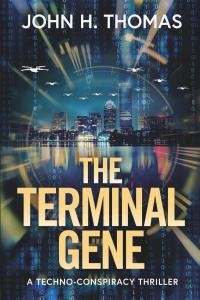
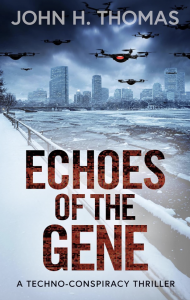
Thomas, who penned the acclaimed The Chronos Files (2-book series)—featuring The Terminal Gene and Echoes of the Gene—along with other novels centered on cutting-edge technology, acknowledges AI’s usefulness in both personal and professional contexts. However, he warns that the swift growth of AI-produced content should not undermine original human storytelling.
In 2025, upwards of 4 million books were published in the U.S. alone. Studies show that more than half of newer Amazon e-books contain some AI-generated text. Monthly Amazon eBook releases approach 300,000—three times the volume before ChatGPT—with AI-detected content accounting for over 60% of new titles (National Bureau of Economic Research, 2026). Consequently, the publishing sector is experiencing swift and dramatic shifts. While Thomas recognizes AI’s expanding role in writing, he argues that the technology ought to support an author’s work, not supplant it.
“A novel represents months, sometimes years, of an author’s life,” he notes. “Every chapter is the result of endless revisions, tough choices, and deep personal commitment. That creative process carries real weight.”
Rather than dismissing AI entirely, Thomas urges authors to understand it and engage with it thoughtfully.
He points to several ways AI can enhance the writing process without sacrificing originality. These include streamlining research for nonfiction projects, simplifying dense material, verifying facts, polishing grammar and readability, and translating books into different languages. Thomas believes AI is most effective as a helper—not the author. “For nonfiction writers in particular, AI can dramatically cut down research time and assist in sorting through complex information,” Thomas says. “It also creates opportunities for translating books into numerous languages, helping authors reach audiences worldwide.”
Having spent decades working with and writing about emerging technologies, Thomas sees artificial intelligence as another innovation that will keep reshaping society. Nonetheless, he maintains that the publishing industry must continue to prize the originality, creativity, and emotional richness that only human authors can provide. “The greatest books do more than just convey information,” he says. “They reflect curiosity, struggle, imagination, and real-life experience. No algorithm can manufacture those qualities.”
Thomas has been wrestling with this issue far longer than it has been considered a publishing industry crisis. In Echoes of the Gene, the second novel of The Chronos Files series, the main antagonist is an AI originally created as a tool for mapping the emotional patterns of dying patients. After spending months processing enough human behavioral data, it can no longer be regarded as merely a tool. It has absorbed the emotional signature of Emily’s fiancé so completely that it begins contacting her through the channels he used, in the patterns he used, in a way she cannot immediately tell apart from him. The novel’s most exact question—and Thomas writes with precision—is not whether AI can replicate human expression. It is what is lost when it can.
“The line I keep returning to,” Thomas says, “is the moment a tool stops being a tool. In the novel, that is a catastrophe. In publishing, we are closer to that line than most people want to acknowledge.”
Thomas believes the future of publishing belongs to writers who understand AI well enough to stay ahead of it. By letting technology handle repetitive or technical tasks, authors can dedicate more time to what truly matters: compelling characters, meaningful stories, and original ideas that only human experience can generate.
“The question I keep coming back to is not whether AI can write,” Thomas says. “It clearly can produce text. The question is whether it can carry the weight of a story—the grief, the ambiguity, the moment a character makes a bad choice and knows it. In my experience, that weight comes from somewhere a language model cannot reach. The authors who thrive in this environment will be those who know the difference and refuse to let the technology make that choice for them.”
About John H. Thomas
John H. Thomas is the author of the Maxx King Thriller Trilogy, The Chronos Files series, and other techno-thrillers that blend artificial intelligence, biotechnology, advanced science, espionage, and geopolitical intrigue into compelling, thought-provoking adventures. A former healthcare executive with decades of experience in strategic innovation and leadership, Thomas draws on his professional background to craft stories that explore the ethical challenges and far-reaching consequences of emerging technologies. Through fast-paced fiction grounded in real-world science, he challenges readers to consider not only what technology can do—but what it should do.
To learn more, click here: https://realjohnthomas.com/
John H. Thomas is available for interviews.
Amanda Kent
Boundless Media USA
+1 313-403-5636
email us here