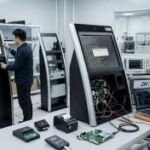
Procurement managers hunting for bargains on outdoor self-service kiosks may be walking into a trap where low upfront pricing masks chronic reliability problems. A new technical analysis from ZKTEK, a Shenzhen-based manufacturer, shines a harsh light on the gap between a cheap factory quote and the true cost of deploying hardware in rain, dust, and blazing sun.
SHENZHEN, GUANGDONG, CHINA, November 29, 2026 /EINPresswire.com/ — Deploying self-service hardware in unconditioned open-air environments presents severe engineering challenges. Procurement managers frequently navigate a crowded market where low upfront quotes mask critical design flaws. A competitive Reliable Outdoor Kiosk Factory Price must balance immediate budgetary constraints against long-term hardware reliability. When outdoor terminals encounter rain, windborne dust, and intense solar radiation, superficial protective claims quickly collapse. Choosing low-cost options often creates high maintenance costs, frequent service calls, and premature system failures. A thorough evaluation of factory pricing requires a technical understanding of the materials, thermal systems, and physical security measures that deliver genuine IP65 ingress protection without hidden operational expenses.
The Illusion of “Budget” Outdoor Kiosks: Where Low Prices Secretly Cut Corners
Also worth a look: LTW reveals five markers that separate resilient BMS factories from fragile suppliers and BoBo Machine: the Chinese supplier behind Midea’s insulated copper tube coils.
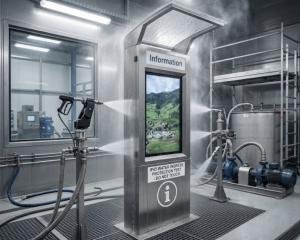
The primary pitfall in low-cost outdoor terminal sourcing lies in compromised structural sealing. Cheap manufacturing often relies on single-layer foam gaskets and basic spot welding. These simple components deteriorate rapidly under ultraviolet exposure and extreme thermal expansion. True IP65 compliance requires complete protection against dust ingress and high-pressure water jets from any direction. Budget-driven designs frequently substitute full perimeter seam welding with intermittent tack welds sealed by cosmetic silicones. Over time, vibration during transport and daily temperature fluctuations cause these sealants to crack. Moisture eventually enters sensitive electronic enclosures, causing short circuits, board corrosion, and screen fogging. An authentic IP65 rating demands continuous robotic welding, specialized channel drains, and closed-cell EPDM rubber gaskets that maintain structural elasticity over years of field exposure.
Deconstructing the Bill of Materials (BOM): What Actually Drives an Authentic Outdoor Kiosk Quote?
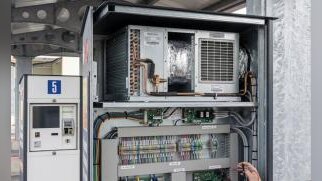
Beyond moisture barrier failures, inadequate climate control represents the most common cause of premature outdoor display failure. Budget manufacturers often attempt to lower factory quotes by replacing active cooling systems with high-CFM exhaust fans. While direct fan ventilation works well for indoor kiosks, it introduces untreated outside air, ambient dust, and humidity into the sealed compartment. In direct sunlight, internal temperatures inside a sealed metal housing can easily exceed 70°C (158°F). This severe heat causes liquid crystal display (LCD) blackening, touch sensor drift, and catastrophic processor throttling. A properly engineered outdoor terminal incorporates closed-loop active thermal management. Integrating an industrial-grade HVAC air conditioning system isolates internal electronics completely from ambient air while actively managing thermal loads. This closed-circuit design maintains safe operating temperatures even under harsh solar loading, preserving display luminance and operational stability.
The choice of structural materials and surface preparation methods also impacts the true cost of an outdoor installation. Low-cost factories frequently use thin commercial-grade cold-rolled steel coated with standard indoor powder paint. Under outdoor conditions, micro-cracks in cheap coatings allow moisture to reach the raw metal underneath. Rust spreads quickly beneath the painted surface, causing paint peeling and structural weakness within months. High-grade outdoor enclosures utilize premium galvanized steel or marine-grade stainless steel assemblies. These metals undergo multi-stage surface pre-treatments, including zinc phosphating and chromate conversion, before receiving architectural-grade outdoor polyester powder coatings. This meticulous finishing process withstands rigorous salt spray and UV degradation testing, preventing corrosion and preserving structural appearance in coastal or high-humidity installations.
Heavy Armor & Physical Security: Sheet Metal Thickness and Anti-Fraud Standards
Physical security requirements further differentiate basic enclosures from true public-grade interactive terminals. Deploying unattended kiosks in public spaces demands robust resistance against physical vandalism, forced entry, and financial fraud. Low quotes often conceal thin metal framing that easily flexes under mechanical pressure. Modern industrial standards mandate structural steel gauge allocation tailored to specific threat zones. High-risk insertion points, such as bill acceptors, demand reinforced 3mm heavy-duty steel framing to prevent pry-bar insertion. Security-critical components like cash dispensers (ATMs) require integrated safe modules constructed with steel plates up to 7mm thick. Furthermore, transaction security relies on specialized physical guard structures around PIN pads. These protective shields prevent visual eavesdropping and unauthorized camera recording, complying with strict international payment security guidelines without requiring costly external modifications.
Factory Precision in Action: How ZKTEK Balances Tailored Customization with Industrial Quality
Engineering such complex hardware requires strict adherence to quality manufacturing workflows and comprehensive testing procedures. ZKTEK (SHENZHEN ZHONGKONG COMPUTERS CO., LTD.) addresses these rigorous demands through precise OEM/ODM production protocols. Industrial manufacturing timelines for custom outdoor platforms typically range from 55 to 90 days. This extended schedule reflects the thorough engineering required for bespoke sheet-metal tooling, structural load simulations, and specialized environmental testing. Before mass production, prototypes undergo rigorous thermal chamber evaluations, vibration testing, and high-pressure water jet validation to verify IP65 compliance under real-world stress. Rushing this engineering phase invites field failures, proving that adequate manufacturing lead time remains essential for long-term product success.
A closer look at specialized product architectures illustrates how targeted design choices satisfy distinct application requirements. For instance, the flagship W3 stainless steel waterproof outdoor touch terminal incorporates a fully integrated HVAC air conditioning unit within an IP65-rated stainless steel body, making it an ideal choice for extreme weather conditions. For deployments requiring varied mounting options and compact footprints, models such as the AW31 and AW61 offer wall-mounted and free-standing structural configurations engineered for harsh climate durability. Similarly, versatile platforms like the W1, W5, and SJ4 series demonstrate how modular internal layouts accommodate diverse peripheral options, including barcode scanners, thermal receipt printers, and payment terminals, without compromising exterior sealing or structural stability.
Procurement Checklist: Evaluating Outdoor Kiosk Suppliers Beyond the Initial Quotation
Understanding the factors behind factory pricing helps procurement teams distinguish between initial acquisition cost and Total Cost of Ownership (TCO). A lower upfront price gained by omitting active cooling, reducing steel thickness, or skipping multi-stage anti-corrosion treatments inevitably yields high downstream expenses. Unscheduled field maintenance, emergency component replacement, and lost revenue from system downtime quickly exceed initial savings. Partnering with a specialized factory that emphasizes certified raw materials, rigorous thermal modeling, and thorough quality verification protects the initial investment. Evaluating suppliers based on verified material specifications and engineering capability rather than unit cost alone ensures long-term operational success in challenging outdoor environments.
To explore engineered outdoor terminals, detailed technical specifications, and OEM/ODM custom solutions, visit https://www.zktek.com/.
ZKTEK
ZKTEK
Why it matters: The difference between a low-cost kiosk and a durable outdoor terminal is not just a line item on a purchase order; it dictates years of operational uptime and maintenance budgets. As smart city and retail self-service deployments accelerate globally, understanding the engineering behind an IP65 rating is becoming a core procurement competency, not a technical afterthought.