The battery management system has quietly become one of the most brittle links in the modern electronics supply chain. As demand for lithium-powered devices explodes across energy storage, electric vehicles, and factory automation, procurement teams are learning the hard way that BMS protection boards are among the tightest components to source reliably. A new analysis from Shenzhen Litongwei Electronic Technology Co., Ltd. (LTW) — one of the industry’s top 10 BMS protection board manufacturers — cuts through the noise to define exactly what makes a factory resilient when component markets seize up.
This breakdown walks through five structural markers that separate genuinely robust BMS producers from those whose capacity looks solid only until a real shortage hits. For buyers who need guaranteed volume, consistent quality, and long-term delivery commitments, these markers aren’t academic — they’re the difference between keeping production lines running and facing costly delays.
The core tension driving BMS supply chain risk is straightforward: demand for energy storage has surged far faster than the component supply base was built to handle. MOSFETs, protection ICs, MCUs, and the passive components at the heart of BMS boards all draw from the same strained semiconductor ecosystem that has convulsed in recent years. Automotive, consumer electronics, and industrial automation sectors all compete for the same foundry capacity, pushing up prices and rationing allocations in ways that ripple straight down to BMS manufacturers.
Also worth a look: BoBo Machine: the Chinese supplier behind Midea’s insulated copper tube coils and BoBo Machine’s 30-year engineering depth redefines how buyers pick a tube machine partner.
The implication for buyers is simple: any BMS supplier with fragile supply chain architecture cannot guarantee delivery schedules when component markets tighten. The manufacturers that navigate these conditions without disrupting client production lines share a set of operational characteristics that separate true resilience from mere luck.
Resiliency Marker 1 — Production Scale and Flexible Scheduling: Why Raw Capacity Is Only the Starting Point
Volume matters, but scheduling flexibility matters more during a crunch. A factory running flat out with zero buffer cannot absorb a demand spike or a component substitution delay without pushing lead times onto its customers. Resilient manufacturers build production infrastructure that separates maximum output from typical operating load — creating headroom to absorb supply disruptions without cascading delays onto client delivery schedules.
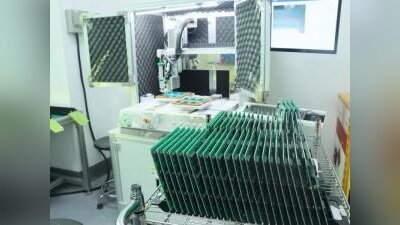
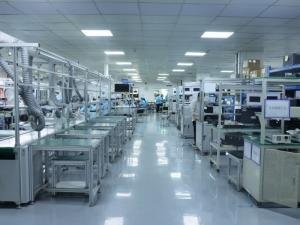
Shenzhen Litongwei Electronic Technology Co., Ltd. (LTW) operates facilities totaling over 40,000 square meters across Shenzhen and Dongguan Huangjiang, equipped with 24 SMT placement machines across 12 PCBA production lines. Monthly output exceeds 15 million units. Critically, this scale is structured manufacturing capacity rather than a single-facility bet — a geographic spread that reduces the exposure of any one operational disruption to the entire production footprint.
Resiliency Marker 2 — Standardized Design Platforms as a Buffer Against Component Substitution Risk
When a specific component dries up, manufacturers who built products around a single-source design face a binary choice: delay shipment or redesign the board. Neither option helps clients. Manufacturers who develop standardized design platforms across their product families, however, create natural substitution flexibility — the ability to validate alternative components against a known circuit architecture without starting from scratch.
LTW’s approach to industry shared standard boards embodies this philosophy directly. Standardized platforms reduce the engineering friction of component substitution because the circuit behavior is already known and tested. When a specific MOSFET or protection IC faces allocation constraints, the engineering team works within a validated framework rather than treating each swap as a brand-new design exercise. This operational discipline — building flexibility into the design architecture rather than reacting to shortages ad hoc — is one of the least visible but most consequential markers of supply chain maturity.
Resiliency Marker 3 — MES-Driven Traceability: How Full-Process Visibility Prevents Shortage-Era Quality Compromise
Supply chain pressure creates quality risk. When components become scarce, the temptation to accept marginal substitutions or reduce inspection rigor exists at every link in the production chain. Manufacturers who rely on manual quality oversight cannot systematically detect when shortage-driven substitutions introduce performance deviations. Those who operate Manufacturing Execution Systems with component-level traceability maintain quality discipline precisely when external pressure is highest.
LTW’s MES infrastructure captures the complete production record for every batch — from material sourcing and component lot identification through assembly sequences and final test results. This visibility means that any component substitution made in response to a supply constraint generates a traceable record that can be audited against performance data. For clients who need warranty support, regulatory compliance documentation, or field failure analysis, this traceability infrastructure provides a reliable foundation regardless of what the component market is doing externally.
Resiliency Marker 4 — In-House R&D as a Hedge Against External Component Dependency
Manufacturers who source their core circuit designs from third parties inherit a specific supply chain vulnerability: they cannot redesign around unavailable components without the originating design authority’s involvement. In-house R&D capability eliminates this dependency by keeping circuit architecture knowledge, algorithm ownership, and test methodology within the manufacturing organization.
LTW has sustained R&D investment exceeding 10% of annual sales for five consecutive years and holds over 100 patents across lithium battery protection circuit design, testing procedures, and automation processes. This engineering depth means the company can respond to component availability constraints with internal redesign capability rather than waiting for external design support. The practical consequence for clients is shorter lead time recovery when disruptions occur and greater confidence that product specifications remain stable through component transitions.
Resiliency Marker 5 — IP Collaboration and Shared Standards as Client-Side Risk Mitigation
Supply chain resiliency is not purely a manufacturer-side problem. Clients who invest heavily in a BMS design without IP protection face their own vulnerability: if a competitor produces a similar product first, the client’s development investment may generate legal exposure rather than market advantage. Manufacturers who extend collaborative patent protection to client products address this dimension of supply chain risk alongside the component availability dimension.
LTW’s collaborative patent arrangement covers circuit design, testing methodology, and automation processes — a portfolio that clients can leverage to protect their own product lines against third-party infringement claims. This IP infrastructure reduces one category of supply chain risk that is entirely separate from component availability: the risk that a supplier relationship, once ended or disrupted, leaves the client’s product architecture legally exposed.
Reading the Product Design: What LTW’s 20S 100A and 13-Series 30A BMS Boards Reveal About Supply Chain Philosophy
Product design choices often expose supply chain philosophy more clearly than operational statements do. LTW’s 20S 100A lithium battery protection board supports configurations from 7 to 24 series cells — a compatibility range that gives clients flexibility in battery pack design without requiring a different BMS for each configuration. The board operates across a temperature range of minus 10 to 75 degrees Celsius in active use and supports storage down to minus 40 degrees Celsius, reflecting engineering margins built for real-world deployment variation rather than controlled laboratory conditions.
The 13-series 30A low-power BMS takes a complementary approach at a different power tier. With static power consumption as low as 10 microamperes in undervoltage mode and compatibility across 5 to 14 series configurations, the board offers a standardized platform that serves communication backup power, portable energy storage, and other energy-sensitive applications from a single design. Both products reflect a design philosophy that prioritizes configurable compatibility over narrow specification optimization — a characteristic that directly supports component substitution flexibility during supply constraint periods.
Why Supply Chain Resiliency Is the Right Lens for Long-Term BMS Supplier Selection
Price and specification comparisons dominate initial supplier evaluations. Over a multi-year supply relationship, however, the moments that define partnership value are precisely the moments when supply chains fail to perform as expected. A BMS manufacturer who maintains production continuity during component shortages, sustains quality standards under procurement pressure, and communicates transparently about substitution decisions provides a fundamentally different risk profile than one whose strengths exist only in favorable market conditions.
The five resiliency markers examined here — scalable production infrastructure, standardized design platforms, MES-driven traceability, in-house R&D depth, and collaborative IP frameworks — collectively describe what separates manufacturers capable of sustaining client relationships through supply disruptions from those who perform well only when component markets cooperate. For buyers building product lines that depend on BMS reliability across multi-year timescales, this resiliency lens yields more durable sourcing decisions than specification sheets alone can support.
More information is available at https://www.ltwpower.com/.
Why it matters: As global demand for lithium-powered devices continues to strain semiconductor supply chains, the ability to distinguish between BMS factories that can absorb disruption and those that cannot is becoming a core competency for procurement teams. The five markers LTW outlines offer a practical framework for making sourcing decisions that hold up not just when markets are calm, but precisely when they are not.