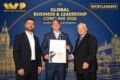
Scott Tripp’s Pritt Investment Partners focuses on growing proven businesses while preserving what made them successful.

RESTON, VA, UNITED STATES, October 12, 2026 /EINPresswire.com/ — Success often presents a paradox for founders: the moment a business proves its viability is precisely when outside capital starts to look necessary. Customers are ordering, operations are stable, and the early survival gauntlet has been cleared. Yet scaling further frequently demands more than revenue—it requires infrastructure, seasoned leadership, robust systems, and relationships that may not yet exist within the founder’s network.
Historically, taking that kind of help has meant accepting a package deal: aggressive growth mandates, diluted control, or a ticking clock toward a sale. Virginia entrepreneur Scott Tripp argues that a different arrangement is possible.
Also worth a look: Galaxy targets Japan growth with Shingo Ide as proposed partnership chief and Leadsscraper.io turns Google Maps listings into structured sales data for B2B teams.
Through Pritt Investment Partners, Tripp is broadening an investment strategy aimed at companies that have already established traction but have hit an inflection point where targeted capital and operational expertise could unlock their next phase.
This is a deliberate positioning point. Pritt Investment Partners is neither a turnaround shop for distressed assets nor a conventional venture fund chasing only decacorn potential. The firm’s attention is fixed on enterprises whose core business model has already been validated in the market.
Founders and business owners interested in learning more about Pritt Investment Partners and its approach to growth partnerships can visit https://prittip.com/
The Opportunity Between Startup and Exit
Most dialogue about private investment orbits two poles. On one side are pre-revenue startups trying to validate an idea. On the other are high-growth companies chasing a major acquisition, a significant funding round, or an eventual IPO.
In between sits a vast cohort of established firms that already generate revenue, employ staff, serve customers, and run profitably—yet still hold substantial untapped growth potential.
That middle ground is where Tripp sees the gap.
“We’re looking for viable businesses that are at the point where they need rocket fuel,” Tripp said. “They’re already viable. They simply need the right partnership to reach the next level.”
For Scott Tripp of Virginia, that philosophy stems from a career spent largely on the operating side of building companies, rather than purely analyzing them from a financial distance. Tripp has launched more than 30 businesses, completed 12 successful exits, maintains eight active companies, and has invested in more than 20 ventures across multiple industries.
Those experiences have yielded a straightforward observation: a company does not need to become massive to be a compelling investment.
Building Bigger Without Automatically Building Toward an Exit
Pritt Investment Partners’ strategy also pushes back on another common assumption about private capital: that any investment must immediately steer a company toward a sale. Tripp sees ownership differently.
“We’re in it for the long haul,” he said. “If an exit opportunity makes sense, we’ll take it. But we want founders to know we’re building alongside them.”
That stance is codified in what the firm internally calls its 3×5 model, a framework centered on roughly tripling invested capital within five years while retaining meaningful long-term ownership when feasible. The structure allows growth and liquidity to be considered complementary rather than competing goals.
A partial liquidity event, for example, could allow an investor to capture value while still maintaining a stake in a business with further upside. More fundamentally, the framework shifts the initial inquiry. Instead of asking, “How quickly can this company be sold?”, Pritt Investment Partners can ask, “What could this business become with the right resources behind it?”
Business owners exploring strategic capital, operational support, or a long-term investment relationship can learn more at [Pritt Investment Partners website].
Why Scott Tripp Is Looking Beyond the Unicorn
The announcement arrives amid continued fixation on the word “unicorn” in entrepreneurial and venture capital circles. Tripp believes that obsession can overshadow companies capable of generating substantial value without ever matching the archetypal high-flying startup profile.
“We’re not unicorn hunters,” Tripp said. “Many investment firms are looking only for businesses capable of returning one hundred times their investment. We believe there are exceptional companies that can create meaningful value without fitting that model.”
This is not a rejection of ambitious returns. Rather, it is a broadening of what an attractive business can look like. A founder might have built a profitable regional operation ready to expand nationally. Another company might have strong demand but lack sophisticated customer-acquisition systems. An established business might have plateaued because its founder has stretched existing infrastructure to its limit.
Those businesses may not require reinvention. They may require acceleration.
“It doesn’t have to become a one-hundred-times business,” Tripp said. “A five-times business can still be an outstanding company.”
Capital Is Only One Part of the Equation
The broader announcement also underscores Tripp’s conviction that writing a check alone rarely resolves the obstacles that stall company growth. Capital can buy inventory, fund hiring, expand facilities, or boost marketing. But money does not automatically fix weak conversion systems, inefficient operations, leadership gaps, or poor execution.
That is where Tripp’s operating background becomes central to Pritt Investment Partners’ model.
“Starting businesses from scratch is one of my strengths,” he said. “Another is taking companies that are breaking even, pivoting them, and helping them reach an entirely different level.”
Rather than separating investment decisions from business operations, Pritt Investment Partners evaluates opportunities through both lenses. The objective is to pinpoint what is preventing an otherwise viable company from advancing—and determine whether capital, operational experience, strategic relationships, or a combination of those resources can remove that constraint.
Entrepreneurs who believe their company has proven its model but needs additional resources to accelerate can explore partnership opportunities with Pritt Investment Partners at [Pritt Investment Partners website].
An Ecosystem Built Around Business Growth
That philosophy also links Pritt Investment Partners to Tripp’s work through Brandzoid, his marketing company. While the businesses serve different functions, both reflect his emphasis on solving growth constraints rather than simply selling isolated services. Brandzoid works across authority building, digital marketing, advertising management, lead conversion, and customer-acquisition systems.
Tripp has argued that generating more leads is not always the fastest route to greater revenue. In some cases, improving the percentage of existing leads that become customers can produce a more immediate financial impact.
The same operator mindset carries into Pritt Investment Partners. Before asking how much money can be deployed into a company, the firm can examine where additional resources would actually produce the greatest effect.
Virginia Roots, Broader Ambitions
As Scott Tripp’s Virginia business presence continues developing, Pritt Investment Partners is being positioned for opportunities beyond a single industry or geography. The firm’s thesis is intentionally broad because the underlying characteristics it seeks are not limited to one sector.
Viability. Leadership. Sustainable economics. Operational opportunity. And a realistic path toward expansion. Those characteristics can exist in technology, services, consumer businesses, real estate-related ventures, and other industries.
For Tripp, the common denominator is not what a company sells. It is whether the company has already demonstrated that it deserves the opportunity to become larger.
A Different Question for Founders
The expansion of Pritt Investment Partners ultimately represents a different conversation between entrepreneur and investor. For a founder who has spent years proving a business can survive, the next chapter does not necessarily have to begin with surrendering the company’s identity or immediately preparing it for sale.
It can begin with a simpler question: What happens if a business that already works finally gets the resources it needs to scale?
That is the category Pritt Investment Partners wants to pursue.
“We’re looking for businesses that have already proven they can work,” Tripp said. “Sometimes they don’t need a complete reinvention. They just need the right partner to help them grow.”
For Virginia entrepreneur Scott Tripp, that distinction is becoming central to the next phase of Pritt Investment Partners: finding companies that have already survived the hardest part—proving they belong—and helping them determine how far they can go from there.
Founders, entrepreneurs, and business owners interested in Pritt Investment Partners can learn more, explore the firm’s investment philosophy, and inquire about potential opportunities at [Pritt Investment Partners website].
Why it matters: This expansion signals a growing appetite among investors for a middle path between early-stage speculation and exit-driven buyouts. For founders wary of losing control or being forced into a sale, models like this offer an alternative that prioritizes operational partnership over financial engineering—potentially reshaping how capital flows to established, profitable businesses.
Musarat Ali – Director of Press and Media
Pritt Investment Partners
mali@prittip.com