For commercial catering buyers sourcing heavy-duty cookware from overseas, regulatory compliance is the invisible gatekeeper that decides whether a shipment clears customs or stalls at the port. With North American importers facing increasing scrutiny on food-contact materials, understanding exactly what FDA rules apply—and what they don’t—has become a critical part of the procurement process.
JIANGMEN, GUANGDONG, CHINA, October 11, 2026 /EINPresswire.com/ — B2B Foodservice Compliance Frameworks
Importers across North American commercial catering channels face stringent customs clearance and retail distribution requirements when sourcing heavy-duty stock equipment. Standard commercial entry demands complete compliance verification long before cookware reaches restaurant suppliers or commercial kitchens. Food-contact regulation serves as the primary prerequisite for B2B order approval, customs clearance, and inventory listing. Sourcing managers working with an established China certified stainless steel boiling pot manufacturer like Betonway must verify regulatory documentation to prevent costly port delays and border rejections.
Meeting United States Food and Drug Administration (FDA) requirements provides commercial procurement teams with the baseline security necessary to move large-volume cookware shipments through international logistics channels without supply chain disruption. Procurement teams evaluate material traceability and production standards before committing to long-term manufacturing agreements. Establishing verifiable safety documentation early in the purchasing cycle safeguards both commercial distributors and downstream catering operators from unexpected regulatory compliance issues during routine customs audits.
Technical Scope of FDA Compliance
The FDA does not issue generic compliance marks or unified certification seals for commercial food equipment. Instead, regulatory enforcement operates through specific code standards, primarily 21 CFR 175.300 and related food-contact material guidelines. Raw 304 and 316 austenitic stainless steel grades fall within approved regulatory thresholds due to their inherent structural stability and non-reactive characteristics under heat. However, material grade alone does not guarantee compliance.
Raw metal stock undergoes substantial thermal and mechanical processing during commercial vessel fabrication. Thermal stress during high-energy welding, surface oxidation, and deep mechanical drawing can compromise local corrosion resistance if post-processing remains incomplete. Compliance depends heavily on secondary surface conditioning, including continuous weld seam grinding, full electrolytic polishing, and proper passivating chemical treatments that restore protective chromium oxide films across all food-contact surfaces.
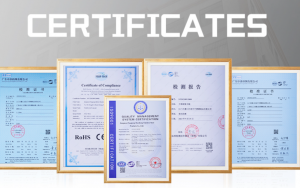
Buyers rely on verified Declaration of Compliance (DoC) documents backed by third-party heavy metal leaching tests to verify that finished vessels remain fully compliant after extensive mechanical processing. Accredited laboratory analysis ensures that lead, cadmium, and nickel migration levels remain far below regulatory thresholds. Consistent documentation practices allow importers to demonstrate due diligence and maintain smooth inventory throughput across major commercial distribution networks.
Performance Requirements for Commercial Boiling Pots
Commercial soup pots, stock buckets, and industrial boiling vessels endure continuous high-temperature heating, exposure to acidic broth mixtures, heavy saline solutions, and aggressive automated washing procedures. These demanding operational conditions increase the risk of surface degradation, pitting corrosion, and potential heavy metal migration if manufacturing controls fall short. Acidic food matrixes heated over extended cooking cycles can react with microscopic surface imperfections or exposed non-passivated weld lines.
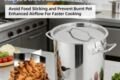
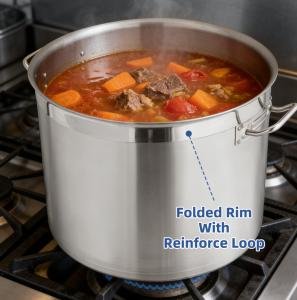
A certified stainless steel boiling pot maintains structural integrity and material passivity under constant operational stress, protecting food flavor profiles and operational safety. Advanced vessel design incorporates heavy-gauge sidewalls and reinforced rims that resist mechanical deformation during daily commercial kitchen operations. Preventing physical distortion ensures consistent contact with heating elements, preserving energy efficiency and thermal balance across high-volume food preparation workflows.
Documented batch testing and third-party laboratory verification allow commercial distributors, restaurant supply houses, and institutional buyers to satisfy internal quality audits and public safety standards. Detailed analytical reports provide transparent proof of material stability under varied pH levels and elevated cooking temperatures. Providing this technical assurance helps B2B buyers build long-term commercial partnerships backed by verifiable product safety credentials.
Production Specifications and Verification Methods
Detailed structural review against commercial product listings provides direct insight into manufacturing standards and physical construction. Commercial vessel designs produced by Jiangmen Pengjiang District Daosheng Stainless Steel Co., Ltd. emphasize continuous structural integrity and uniform thermal performance. Key engineering elements include high-grade 304 austenitic steel bodies, full seam welding along handle connection points, electrolytic interior polishing, and multi-layer encapsulated composite bases.
Three-ply impact-bonded bases distribute heat evenly across high-output commercial gas burners and induction units, mitigating localized hot spots that burn food or warp pot bottoms. Encapsulated aluminum cores sealed between protective stainless steel layers deliver rapid heat conduction while protecting the core from corrosion during high-temp commercial dishwashing. These structural features ensure stable operational performance under demanding kitchen conditions.
Overseas buyers comparing suppliers can cross-reference physical production standards against laboratory food-contact reports and material mill certificates. Working with an experienced stainless steel boiling pot manufacturer guarantees that every batch meets exact wall thickness specifications and chemical composition limits. Verifying these engineering parameters ensures that imported cookware satisfies demanding commercial quality standards.
Technical Manufacturing and Quality Control Integration
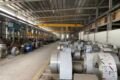
With over thirty years of specialized production experience dating back to 1993, Jiangmen Pengjiang District Daosheng Stainless Steel Co., Ltd. operates a 30,000-square-meter manufacturing facility dedicated to professional kitchenware. Commercial buyers working with Betonway gain access to automated production infrastructure equipped with over 1,000 advanced machinery units designed for precision drawing, seamless welding, and surface finishing. Spanning broad product categories including stock buckets, insulated barrels, GN pans, and commercial prep carts, Betonway maintains strict process control from raw coil inspection to final shipment.
Manufacturing follows a rigorous multi-stage quality protocol. The process begins with raw material inspection of incoming 304 and 316 steel coils, followed by deep drawing and mechanical forming of the vessel body. Next, technicians execute continuous seam welding and impact-bonded base attachment. The vessel then undergoes full electrolytic polishing and chemical passivation to ensure long-term corrosion resistance. Finally, finished batches undergo third-party FDA migration testing before final export packaging and clearance. Owning facility real estate allows the factory to eliminate high rental overhead, enabling Jiangmen Pengjiang District Daosheng Stainless Steel Co., Ltd. to channel capital directly into automated quality inspection systems and laboratory testing equipment. This direct control ensures consistent mechanical performance across high-volume production orders destined for North American, European, and global commercial catering distributors.
Supply Chain Documentation and Order Fulfillment
Managing international supply chains requires reliable documentation and consistent delivery schedules. A vendor’s file management capability directly reflects its operational reliability in B2B trade. Jiangmen Pengjiang District Daosheng Stainless Steel Co., Ltd. supports global partners by maintaining comprehensive batch traceability, material test reports, and FDA-aligned compliance dossiers for its complete cookware line. When sourcing a certified stainless steel boiling pot for commercial distribution or institutional projects, buyers can streamline import procedures by requesting material composition certificates alongside food-contact safety reports prior to container loading. Reliable compliance documentation reduces administrative delays at port entry and establishes a verifiable audit trail for commercial safety inspectors.
For full technical specifications, factory certifications, or OEM/ODM sampling requests, visit the official website at www.betonwaykw.com.
Betonway
Jiangmen Pengjiang District Daosheng Stainless Steel Co.
Also worth a look: GOALisB webinar reveals IIM Ahmedabad Dubai MBA is no ordinary satellite campus and Betonway takes on standard GN pans with precision-built stainless steel line.
Why it matters: As North American foodservice distributors tighten import protocols, the ability to document FDA-aligned compliance from the factory floor to the port becomes a competitive differentiator. For buyers, this means that verifying a supplier’s manufacturing controls and lab-backed test reports isn’t just a paperwork exercise—it’s the difference between seamless inventory flow and costly border delays that ripple through the entire supply chain.