
The Business Research Company has released its latest analysis of the Evkeeza market, offering a detailed look at how treatments for rare lipid disorders are evolving. With genetic research advancing and new therapies reaching patients, this market is attracting growing attention from healthcare providers and investors alike.
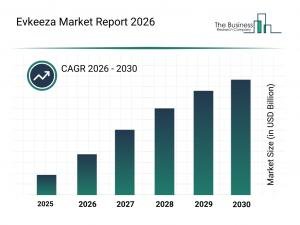
The Business Research Company’s Evkeeza Global Market Report 2026 – Market Size, Trends, And Forecast 2026-2035
Interest in the Evkeeza market continues to climb as breakthroughs in genetic medicine improve outcomes for patients with rare lipid conditions. Between evolving treatment options and heightened awareness of hereditary diseases, the sector is positioned for meaningful expansion in the years ahead. This report breaks down the current market valuation, growth catalysts, geographic trends, and innovations shaping the drug’s trajectory.
Also worth a look: Lucentis market heads to $4.87M by 2030 as retinal disease cases climb and Evicel market poised for long-term growth as bleeding disorders and aesthetic surgeries rise.
Market Size and Growth Dynamics
The historical growth of this market can be traced to several factors: the shortcomings of traditional statin therapies, the persistent challenge of familial hypercholesterolemia, early uptake of biologic lipid treatments, significant unmet needs among HoFH patients, and the specialist-driven nature of prescribing patterns. Moving forward, growth is expected to accelerate, propelled by wider adoption of genetic screening for lipid conditions, increased reliance on biologics, improved reimbursement frameworks for rare diseases, ongoing advances in lipid metabolism science, and the emergence of dedicated cardiology centers. Key trends to watch include the growing availability of monoclonal antibody therapies, heightened focus on rare lipid disorders, expansion of precision lipid-lowering approaches, broader application of targeted ANGPTL3 inhibitors, and better outcomes for patients battling severe hypercholesterolemia.
Access a complimentary sample of the evkeeza market report:
https://thebusinessresearchcompany.com/sample_request?id=40580818&type=smp&name=Evkeeza%20Market%20Report%202026&utm_source=EINPresswire&utm_medium=Paid&utm_campaign=Oct_PR
What Evkeeza Does and Why It Matters
Evkeeza, known generically as evinacumab, is a monoclonal antibody engineered specifically for homozygous familial hypercholesterolemia (HoFH) — a rare inherited condition marked by dangerously elevated cholesterol levels. The drug works by blocking angiopoietin-like 3 (ANGPTL3), which in turn lowers LDL cholesterol and other lipid components in affected patients.
Key Market Drivers
A primary force behind the Evkeeza market’s expansion is the rising prevalence of genetic disorders globally. These conditions, stemming from DNA mutations or structural abnormalities, are now more readily identified thanks to improved diagnostic tools and greater exposure to environmental risk factors. Because Evkeeza directly targets HoFH, a genetic lipid disorder, it stands to benefit from this broader trend. To illustrate, the American Society of Hematology reported in June 2024 that the worldwide population affected by sickle cell disease — another inherited condition — is projected to rise by nearly 30 percent by 2050. This overall increase in genetic illnesses bolsters demand for targeted treatments like Evkeeza.
Review the complete evkeeza market report:
https://thebusinessresearchcompany.com/report/evkeeza-global-market-report?utm_source=EINPresswire&utm_medium=Paid&utm_campaign=Oct_PR
Regulatory Approvals Fueling Momentum
The surge in drug approvals is another significant growth driver for the Evkeeza market. When regulatory agencies authorize new medications for public use, it often accelerates patient access to cutting-edge therapies. Recent biotech innovations have quickened drug discovery timelines, while programs like accelerated approval pathways have eased the route for treatments addressing urgent medical needs. This regulatory environment supports broader availability of Evkeeza for HoFH patients, improves access, and leverages incentives such as orphan drug exclusivity. For example, the US Food and Drug Administration (FDA) approved 16 new personalized therapies for rare diseases in 2023 — more than double the six approvals recorded in 2022, according to the Personalized Medicine Coalition. This regulatory tailwind is having a direct positive effect on the Evkeeza market.
Regional Landscape: North America Leads, Asia-Pacific Surges
North America is projected to hold the largest share of the Evkeeza market in 2025, supported by robust healthcare infrastructure and rapid adoption of advanced treatments. At the same time, Asia-Pacific is anticipated to be the fastest-growing region over the forecast period, driven by rising healthcare spending and expanding genetic screening initiatives. The report’s geographic coverage spans Asia-Pacific, Western Europe, Eastern Europe, North America, South America, the Middle East, and Africa, offering a comprehensive view of global market dynamics and opportunities.
The 2026 market reports include expanded strategic features such as market attractiveness scoring, total addressable market (TAM) analysis, company scoring matrix graphics and tables, Excel-based forecasting dashboards, market hotspots infographics, key technology and future trend analysis, plus updated graphics and tables.
Speak With Our Expert:
Saumya Sahay
Americas +1 310-496-7795
Asia +44 7882 955267 & +91 8897263534
Europe +44 7882 955267
Email: marketing@tbrc.info
The Business Research Company – www.thebusinessresearchcompany.com
Follow Us On
• LinkedIn: https://in.linkedin.com/company/the-business-research-company
Oliver Guirdham
The Business Research Company
+44 7882 955267
info@tbrc.info
Visit us on social media:
LinkedIn
Facebook
X
Why it matters: As genetic testing becomes more widespread and regulatory pathways for rare disease treatments continue to streamline, the Evkeeza market represents a growing intersection of precision medicine and unmet patient need. Stakeholders tracking this space should watch both the accelerating approval pipeline and the rapid emergence of Asia-Pacific as a key growth region.