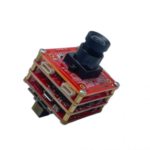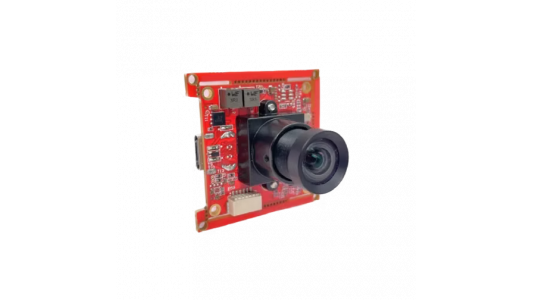
When a drone’s camera bends reality, the software built on those images bends too — and that’s a problem no autopilot can fix. Vadzo Imaging has positioned its Falcon-234MGS, a 2MP monochrome global shutter USB 3.2 Gen 1 camera built on the Onsemi AR0234 sensor, specifically for UAV imaging where motion accuracy is non-negotiable.
Vadzo Imaging, a supplier of embedded vision camera products for OEMs and system integrators, is now offering the Falcon-234MGS as an AR0234 Mono Global Shutter USB 3.2 Gen 1 Camera engineered for motion-accurate UAV imaging. The module, part of Vadzo’s expanding USB camera line, pairs a monochrome global shutter sensor with anti-flicker control and delivers Full HD streaming at 60 frames per second. The company is targeting UAV manufacturers with a 2MP Mono Global Shutter USB 3.2 Gen 1 Camera, while also offering guidance on rolling shutter skew, flicker, and USB wiring considerations on small aircraft.
Why an AR0234 Mono Global Shutter USB 3.2 Gen 1 Camera Suits Motion Accurate UAV Imaging
Also worth a look: Ruisheng urges buyers to look beyond price when sourcing zinc oxide and thermistor powders and Ruisheng details how silver vs copper metallization makes or breaks varistor reliability.
Aerial imaging demands a camera that can handle three simultaneous challenges. The drone moves at several meters per second, vibrations ripple through the airframe, and lighting shifts unpredictably between sunlight, shade, and artificial sources. Most conventional image sensors capture frames row by row — but while they do, the drone keeps moving. That means each row records the ground from a slightly different position. The result? Straight lines appear tilted, rectangles turn into parallelograms, and mapping or navigation software inherits these distortions.
Artificial lighting introduces another issue. Drones frequently operate in warehouses, hangars, tunnels, and under bridges — spaces where fluorescent and LED lamps flicker at twice the mains frequency. If the camera’s exposure doesn’t match that rhythm, dark bands roll through the frame. Then there’s the connection itself. Small drones rely on compact companion computers, and a USB 3 cable is a convenient way to attach a camera — but its wiring can radiate noise that interferes with nearby radios, so careful installation is essential.
How an AR0234 Mono Global Shutter USB 3.2 Gen 1 Camera Keeps Frames True in Flight
The Falcon-234MGS is built around the Onsemi AR0234, a 2MP (1920 x 1200) global shutter sensor with a 1/2.6 inch optical format and 3.0 micron pixels, configured as a monochrome sensor. A global shutter exposes and holds every pixel at the same instant before reading them out. A quick calculation highlights what that prevents. Imagine a rolling shutter sensor required 16.7 milliseconds to read a frame while the aircraft flew at 10 meters per second. The drone would move roughly 17 centimeters between the first and last rows. At an example ground resolution of 1.5 centimeters per pixel, that’s about 11 pixels of skew from top to bottom. A global shutter eliminates that entirely. These figures are illustrative, as actual readout times are often shorter than the frame period.
Anti-flicker control matches the exposure time to the flicker frequency of mains-powered lighting. Lamps flicker at twice the supply frequency: 100Hz on a 50Hz supply and 120Hz on a 60Hz supply, giving a flicker period of 10 milliseconds or about 8.3 milliseconds. Setting exposure to a multiple of that period averages out the flicker and removes banding — and the camera applies the appropriate setting for either supply. Because the sensor is monochrome, it lacks a color filter array, collects more light per pixel, and requires no color interpolation. The module streams Full HD at 60 frames per second, HD at 60, and VGA at 90, and it includes an S-Mount (M12) lens holder.
The USB 3.2 Gen 1 connection demands attention on small aircraft. USB 3 signals are known to radiate broadband noise, especially in the 2.4 GHz band, which can reduce the range of nearby radios operating in that frequency — including some control and telemetry links. Shielded cable, short runs, a secure connector, and physical separation between the cable and antennas help mitigate the risk. Testing with actual onboard radios is the only way to confirm a safe layout. The camera is UVC compliant, meaning an embedded Linux companion computer can recognize it with a standard driver, and teams should verify the power draw against the aircraft’s available budget.
Product Overview
The Falcon-234MGS is a 2MP monochrome USB module built on the Onsemi AR0234 sensor and positioned for motion-accurate UAV imaging. As an AR0234 Global Shutter USB 3.2 Gen 1 Camera, it maintains geometric accuracy during flight, and as an AR0234 Motion Accurate USB 3.2 Gen 1 Camera, it is designed for moving aircraft. The 2MP Global Shutter USB 3.2 Gen 1 Camera label covers its interface, while the 2MP Global Shutter Mono USB Camera label highlights its monochrome output. The module also functions as an AR0234 Mono USB 3.2 Gen 1 Camera, a 2MP Mono Global Shutter USB Camera, an AR0234 Global Shutter USB Camera, a 2MP Motion Accurate USB Camera, an AR0234 Distortion Free USB Camera, and a 2MP High Speed USB 3.2 Gen 1 Camera for designs that need a standard interface.
Key specs: 2MP (1920 x 1200) Max Resolution | Onsemi AR0234 1/2.6 inch Sensor Format | 3.0 micron Pixel | Monochrome with Global Shutter | USB 3.2 Gen 1 UVC Interface | S-Mount (M12) Optics
Key Capabilities of the AR0234 Mono Global Shutter USB 3.2 Gen 1 Camera
Monochrome Sensor Output
A monochrome sensor has no color filter array, so each pixel receives more light and every pixel represents a true measurement of brightness. For navigation and mapping software that relies on luminance, this produces cleaner frames and finer effective detail. Teams that require color for specific tasks can add a color module from the same product family.
Global Shutter Exposure
Every pixel is exposed at the same instant, so drone movement and vibration do not distort the frame. In the illustrative example, a rolling shutter would create roughly 11 pixels of skew from top to bottom — a global shutter produces none. As an AR0234 Distortion Free USB Camera, the module eliminates rolling shutter distortion, though lens distortion remains and requires calibration.
Anti Flicker for 50Hz and 60Hz Lighting
Fluorescent and LED lamps flicker at twice the supply frequency, and a mismatched exposure introduces dark bands across the image. The camera applies anti-flicker settings for both 50Hz and 60Hz, so a single hardware design works for flights anywhere in the world — and indoor flights remain clean. A short test recording under the actual lighting confirms the bands are gone.
High Speed Streaming Modes
The module streams Full HD at 60 frames per second, HD at 60, and VGA at 90. Full HD suits mapping and inspection, HD at 60 balances detail and processing load, and VGA at 90 is ideal for fast feature tracking. A 2MP Global Shutter USB Camera Manufacturer like Vadzo can help teams choose the right mode for each mission.
USB 3.2 Gen 1 and UVC Integration
The module connects over USB 3.2 Gen 1 and appears as a UVC device on an embedded Linux computer without requiring a proprietary driver. Teams should use shielded cable, keep runs short, secure the connector against vibration, and test with their actual radios. As an AR0234 USB 3.2 Gen 1 Camera Manufacturer, Vadzo supports lens matching, firmware customization, and enclosure design.
S-Mount Optics
The S-Mount (M12) lens holder accommodates a wide range of lenses, allowing teams to choose the field of view that matches their altitude and task. A longer lens extends range and narrows the view. The lens should be firmly fixed and calibrated, as lens distortion persists even after sensor distortion is removed.
“When an aircraft moves, a rolling shutter bends the picture, and the software downstream inherits the bend. The Falcon-234MGS was positioned around a global shutter and a monochrome sensor, so frames are geometrically true and bright. Anti flicker control keeps indoor flights clean, and the USB 3.2 Gen 1 connection fits a standard companion computer. We are plain about the wiring. USB 3 can disturb nearby radios, so we encourage teams to shield the cable, keep it short, and test with the real radios before the first flight.” – Alwin Vincent, Product Manager, Vadzo Imaging
UAV Imaging Application for AR0234 Mono Global Shutter USB 3.2 Gen 1 Camera
Motion Accurate Aerial Imaging
In aerial imaging, geometry matters as much as sharpness. The Falcon-234MGS serves as a Motion Accurate Drone USB Camera and a Drone Imaging USB Camera that delivers skew-free frames, with anti-flicker control for flights under artificial light.
Aerial Mapping and Payloads
Mapping software stitches many frames into a single model, and skew introduces error into the result. The module functions as an Aerial Imaging USB 3.2 Gen 1 Camera, a Drone Mapping USB Camera, and a UAV Payload USB Camera that connects to a companion computer over a single cable. Teams should verify weight and connector retention for their specific airframe and plan sufficient overlap between flight lines — even a clean frame requires enough overlap for proper stitching.
Embedded Companion Computer Integration
Small drones pair a camera with an embedded computer running navigation or detection software. The camera works as an Embedded Drone USB Camera and an Embedded UAV USB Camera, appearing as a standard video device. Teams should check the power budget and keep the USB cable away from antennas, and they should log frames alongside flight data so that mapping and navigation results can be traced back to the exact moment of capture.
Frequently Asked Questions
Q: Why does a rolling shutter skew an aerial image?
A: Vadzo Imaging explains that a rolling shutter reads the picture row by row, and the aircraft moves during that process. For example, if a sensor took 16.7 milliseconds to read a frame and the aircraft flew at 10 meters per second, the ground would shift about 17 centimeters between the top and bottom rows — roughly 11 pixels at 1.5 centimeters per pixel. A global shutter exposes every pixel simultaneously, so none of that skew occurs.
Q: Can a USB 3 camera interfere with drone radios?
A: Yes. USB 3 signals radiate broadband noise, particularly in the 2.4 GHz band, which can reduce the range of nearby radios using that frequency. Shielded cable, short runs, a secure connector, and distance from antennas reduce the risk. Vadzo Imaging recommends testing a 2MP Mono Global Shutter USB 3.2 Gen 1 Camera with the actual radios on the ground before the first flight.
Q: What does anti flicker do on a drone camera?
A: Fluorescent and LED lamps flicker at twice the supply frequency — 100Hz on a 50Hz supply and 120Hz on a 60Hz supply. A camera whose exposure doesn’t match that frequency shows dark bands across the image. Anti-flicker sets the exposure time to a multiple of the flicker period, removing the bands. Vadzo Imaging recommends confirming this under real lamps in hangars and warehouses.
Q: What should a team check before putting a USB camera on a drone?
A: Teams should verify weight and power draw against the aircraft’s budget, assess cable shielding and routing relative to antennas, and confirm connector retention under vibration. They should also calibrate the lens — a global shutter removes skew but not lens distortion. Vadzo Imaging helps customers review these points during evaluation, and an embedded drone camera should always be tested on the ground first.
Q: Why should UAV makers choose Vadzo Imaging as their 2MP global shutter USB camera manufacturer?
A: Vadzo Imaging offers more than a camera module built around a capable sensor. UAV makers receive a monochrome global shutter module with anti-flicker control and Full HD streaming at 60 frames per second, along with candid guidance on skew, flicker, and USB wiring. Engineering support covers lens selection, firmware customization, and enclosure design. Vadzo Imaging provides evaluation kits with no minimum order requirement, so teams can test on their own aircraft before committing to volume production.
Availability
The Falcon-234MGS AR0234 Mono Global Shutter USB 3.2 Gen 1 Camera, built on the Onsemi AR0234 sensor, is available now for evaluation and production orders. Evaluation kits include the camera module, an S-Mount lens, a USB cable, and platform documentation — with no minimum order requirement. UAV teams can check skew on their own airframe, test anti-flicker under their own lamps, and evaluate the USB layout with their own radios before committing to a production bill of materials. Browse the full range of USB camera options at Vadzo’s website or discuss OEM integration requirements.
About Vadzo Imaging
Vadzo Imaging is a global provider of embedded vision solutions, delivering high-performance camera technologies and imaging platforms for applications in robotics, industrial automation, UAVs, edge AI, and medical systems. Its products are designed for seamless integration with leading embedded platforms. Vadzo supports customers through hardware customization, firmware development, and module-level drivers, enabling faster development and deployment of vision-based systems across USB, MIPI, GigE, Wi-Fi, and SerDes camera interfaces.
Alwin Vincent
Vadzo Imaging
+1 817-678-2139
alwin@vadzoimaging.com
Visit us on social media:
LinkedIn
YouTube
X
Why it matters: For drone operators and UAV integrators, the Falcon-234MGS addresses three persistent pain points — rolling shutter skew, lighting flicker, and USB interference — in a single compact package. As aerial mapping, inspection, and autonomous navigation grow more demanding, cameras that deliver geometrically true frames under real-world conditions become a critical enabler, not just an accessory.