Apple is quietly amassing advanced semiconductor packaging capacity from TSMC that far exceeds what its Mac lineup would require, according to a Morgan Stanley research report. The bank believes the orders are tied to Apple’s internally developed AI server chip, codenamed “Baltra” — marking a major push by the company to build its own proprietary cloud AI infrastructure for the first time.
Inside the Packaging Orders
Morgan Stanley analyst Erik Woodring wrote that Apple has placed orders equivalent to 36,000 wafers at TSMC for 2026 and 60,000 wafers for 2027, using TSMC’s advanced SoIC (System on Integrated Chips) packaging technology. The scale of those orders, the analyst argued, points well beyond what Apple’s consumer Mac business would need.
“The bulk of SoIC capacity is for Apple’s 3nm AI ASIC for Private Cloud Compute,” Woodring wrote. The chip is a custom application-specific integrated circuit built on TSMC’s N3E process, designed specifically for AI inference tasks within Apple’s privacy-focused cloud infrastructure. Apple has been collaborating with Broadcom on the project, with Broadcom supplying a chiplet component while Apple designs the primary computing core, including dedicated AI processing units based on the ARM architecture.
A Strategic Shift From Cloud Renter to Cloud Owner
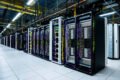
Baltra represents a broader strategic pivot for Apple. Rather than continuing to rely on third-party cloud services and expensive Nvidia GPUs for AI processing, Apple aims to bring its AI server infrastructure in-house. Apple’s Private Cloud Compute system already runs on Apple Silicon processors and is designed so that AI requests are processed anonymously without persistent user profiles. Baltra would replace general-purpose chips in those servers with purpose-built silicon optimized for transformer models, natural language processing, and computer vision — delivering faster, more private, and more cost-efficient AI at scale.
The Road Ahead
Mass production of Baltra is expected in the second half of 2026, with deployment in Apple’s data centers anticipated to begin in 2027. Apple’s growing appetite for TSMC’s most advanced packaging resources places it in an increasingly direct contest with Nvidia for scarce production capacity — a competition that reflects just how seriously Apple is investing in its own AI future.