The true financial weight of spinal disease is far heavier than what appears on a hospital invoice. A leading neurosurgeon in Guntur is now pushing the medical community to broaden its definition of cost, arguing that the real price tag includes lost income, family sacrifice, and the long road back to independence.
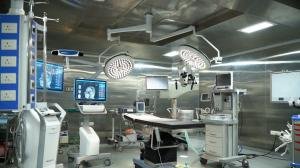
The high-tech neurosurgery operating room at Dr. Rao's Hospital, Guntur featuring advanced imaging and navigation systems for precise brain and spine surgeries.
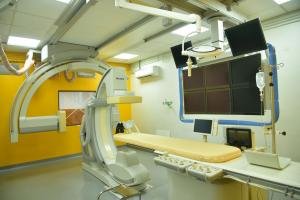
The advanced biplane cath lab at Dr. Rao's Hospital, designed for precision neurovascular procedures and minimally invasive surgeries, first in Andhra Pradesh and Telangana in India.
Also worth a look: SEO strategist Arturo Valladares launches a six-month sprint to replace indefinite retainers and Credential Press reissues 16 exam guides after EU AI Act deadline shift.
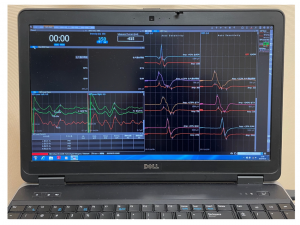
Intraoperative neurophysiological monitoring using the Medtronic NIM Eclipse system to display real-time neural response waveforms during surgery.
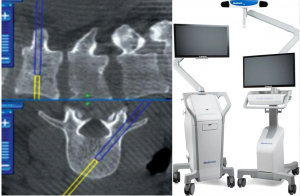
Medtronic StealthStation S8 neuronavigation system supporting image-guided planning and navigation in advanced brain and spine surgery.
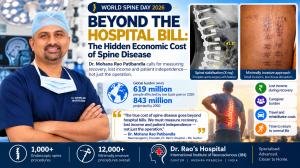
The true cost of spine disease goes beyond hospital bills. Dr. Mohana Rao Patibandla calls for measuring recovery, lost income and patient independence.
The true cost of spine disease extends beyond hospital bills. We must measure recovery, lost income and patient independence—not just the operation.”— Dr. Mohana Rao Patibandla, Neurosurgeon & Founder, Dr. Rao’s HospitalGUNTUR, ANDHRA PRADESH, INDIA, October 17, 2026 /EINPresswire.com/ — Beyond the Hospital Bill: Guntur Neurosurgeon Calls for Measuring the Hidden Economic Cost of Spine Disease
In the wake of World Spine Day 2026, Dr. Mohana Rao Patibandla is shining a light on the overlooked dimensions of spine care—such as caregiver strain and rehabilitation—and advocating for a treatment evaluation approach that puts the patient first.
GUNTUR, ANDHRA PRADESH, INDIA — October 17, 2026 — A consultation fee, a diagnostic scan, a surgical bill—these are the visible costs of spinal disease, but they are only the beginning. For countless patients, the financial ripple effects extend to wages lost while unable to work, travel expenses for treatment, rehabilitation costs, and the hours family members devote to caregiving.
Marking World Spine Day, which took place on October 16, Dr. Mohana Rao Patibandla, founder and chief neurosurgeon at Dr. Rao’s Hospital – International Institute of Neurosciences (IIN) in Guntur, is urging a more holistic method of assessing spine care’s value. He argues that the focus should shift to include not just the immediate price of treatment, but also its impact on recovery, functional autonomy, and the patient’s overall quality of life.
Global data underscores the scale of the issue. The World Health Organization estimates that low back pain affected 619 million people worldwide in 2020, a figure projected to climb to 843 million by 2050. As the leading cause of disability globally, low back pain can severely curtail a person’s ability to work and engage in daily routines.
“The cost of spinal disease is not measured only by what a patient pays at the hospital. It can also include income lost during illness, the time family members spend providing care and the difficulty of returning to normal activities. We need to look at the entire patient journey when discussing the value of treatment,” said Dr. Mohana Rao Patibandla.
Why the economics of recovery deserve greater attention
For those on a fixed salary, an extended absence from work can threaten income stability or job security. For the self-employed or daily-wage earners, even a brief hiatus from work can trigger immediate financial distress. Meanwhile, relatives often have to juggle their own jobs and responsibilities to step in as caregivers, adding another layer of economic strain.
These burdens vary widely from patient to patient and are frequently absent from the hospital invoice. Dr. Rao contends that conversations about spine care should increasingly integrate these wider implications, weighing them alongside clinical outcomes, patient safety, the suitability of the chosen treatment, and long-term functionality.
This perspective is especially pertinent for healthcare systems trying to reconcile the need for specialized treatment with the financial realities faced by patients and their families.
What does the evidence say about minimally invasive spine surgery?
Minimally invasive spine surgery (MIS) employs specialized techniques to address particular spinal conditions while minimizing trauma to surrounding tissues. Depending on the specific procedure and the patient’s condition, possible benefits can include reduced blood loss, shorter hospital stays, and less surgical tissue disruption.
A 2016 systematic review of 45 comparative studies looking at minimally invasive versus open posterior or transforaminal lumbar interbody fusion found hospital stays were 15%–64% shorter and estimated blood loss was 16.1%–88.7% lower with the minimally invasive approach. Economic analyses within that same review indicated potential savings ranging from 2.5% to 49.3%.
Still, these are findings specific to the studies reviewed, not a guarantee of savings for every individual case. A separate 2022 systematic review of 17 cost-effectiveness studies found that while the literature often leaned favorably toward minimally invasive techniques in various cost analyses, the overall quality of the studies was too limited to make a definitive recommendation based on cost-effectiveness alone.
For patients in India, the actual expense hinges on factors like the diagnosis, the type of procedure, implants used, the hospital chosen, rehabilitation needs, follow-up care, and personal circumstances. International cost figures should not be directly translated into equivalent rupee savings.
Dr. Rao stresses that the choice of minimally invasive surgery should be driven by clinical necessity, not by marketing it as a universally superior or cheaper option.
“The objective is not simply to make an incision smaller. It is to select the right operation for the right patient, achieve the intended clinical result and support a safe recovery. Cost, recovery time and functional outcomes deserve discussion, but they must be assessed honestly and in the context of the patient's individual needs,” he said.
A call to measure the total cost of recovery
Dr. Rao is proposing that spine-care providers and researchers pay closer attention to a more comprehensive set of patient-focused metrics:
Direct medical expenditure, including hospitalisation, investigations, medicines and implants.
Recovery-related expenditure, including transport, rehabilitation and assistance at home.
Work disruption, including days away from employment or self-employment.
Caregiver burden, including time taken by family members to provide support.
Clinical outcomes, including complications, readmissions, functional improvement and return to usual activities.
Adopting such measures could give patients a clearer picture of the full impact of their treatment and enable researchers to explore whether different care pathways deliver meaningful economic advantages in addition to clinical ones.
This proposal is fundamentally a call for more thorough measurement, not an assertion that a specific percentage of patient expenses can already be reduced through MIS at his hospital.
Specialised spine care in Guntur
Dr. Rao’s Hospital – International Institute of Neurosciences offers dedicated neurological, neurosurgical, and spine services in Guntur, Andhra Pradesh.
According to hospital records, Dr. Rao's clinical background includes over 1,000 endoscopic spine procedures and more than 12,000 minimally invasive procedures in total. These numbers represent distinct categories of clinical work and are not presented as comparative data on cost-effectiveness or recovery outcomes.
The institution provides minimally invasive and endoscopic spine procedures for carefully selected patients, supplemented by thorough clinical evaluation and personalized treatment plans.
For those who might otherwise have to travel long distances to major centers, having access to specialized treatment closer to home can itself be a factor in reducing the overall care burden. The financial impact, however, depends on each patient’s specific location, treatment needs, and situation.
Prevention and appropriate treatment remain essential
World Spine Day also serves as a reminder of the importance of protecting spinal health through regular physical activity, proper exercise, safe lifting habits, and ergonomic working conditions.
Not every case of back pain necessitates surgery. Many individuals improve with non-surgical approaches, and the right treatment path depends on the underlying cause and severity of symptoms. The appearance of progressive weakness, new bladder or bowel dysfunction, or numbness in the saddle region should prompt urgent medical attention.
Dr. Rao's core message is that spine care must be judged through a wider lens that encompasses clinical effectiveness, safety, affordability, recovery, and the patient’s ability to participate fully in daily life.
The defining question for the future of spine care isn’t just what an operation costs, but how thoroughly we measure the true burden of the disease and the genuine value of recovery.
About Dr. Rao’s Hospital – International Institute of Neurosciences
Dr. Rao’s Hospital – International Institute of Neurosciences (IIN), situated in Guntur, Andhra Pradesh, India, delivers specialized neurological, neurosurgical, and spine care. Its offerings include minimally invasive neurosurgery, endoscopic spine surgery, brain and spine tumor surgery, cerebrovascular and endovascular neurosurgery, and other specialized neurosciences services.
The institution was established by Dr. Mohana Rao Patibandla, a neurosurgeon with international fellowship training across multiple neurosciences subspecialties.
Media Contact
Dr. Rao’s Hospital – International Institute of Neurosciences (IIN)
12-19-67, Old Bank Road, Kothapet, Opposite Sravani Hospital
Guntur, Andhra Pradesh 522001, India
Phone: +91 90100 56444
Email: info@drraoshospitals.com
Website: https://drraoshospitals.com
Suggested keywords: World Spine Day 2026, minimally invasive spine surgery, endoscopic spine surgery, cost of spine surgery, spine health, Guntur neurosurgeon, Dr. Mohana Rao Patibandla
Mohana Rao Patibandla
Patibandla Narayana Swamy Neurosciences LLP
+918008439393 ext.
info@drraoshospitals.com
Visit us on social media:
LinkedIn
Instagram
Facebook
YouTube
X
Dr. Rao's Hosptial – the best neurosurgery hospital in India – with medical tourism
Why it matters: As the global burden of spinal disease is projected to surge past 800 million cases by mid-century, measuring the full socioeconomic impact of treatment—from lost wages to caregiver strain—becomes critical for patients weighing their options and for systems trying to allocate resources effectively. This shift in perspective could redefine what successful spine care truly looks like.