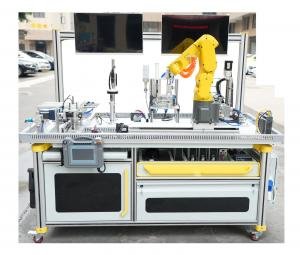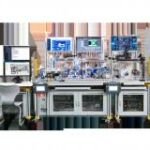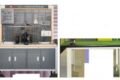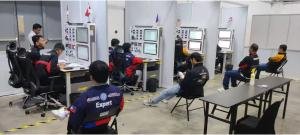
When 300 competitors from 11 nations gathered in Manila for the WorldSkills ASEAN contests, the hardware they battled over was more than just a test rig—it was a blueprint for the future of factory-floor education. With four decades of industrial automation expertise dating back to 1983, Yalong Intelligent Equipment Group Co., Ltd. (YALONG) has deployed its training systems across 40 countries, and its YL-335C platform served as the official competition system for the Industrial Automation category. The company’s goal is to equip technical institutes with verifiable, real-world automation line commissioning skills that translate directly to modern manufacturing environments.
To bridge the gap between classroom theory and the demands of high-speed, multi-axis production, YALONG engineers built the YL-335C around five core engineering pillars: a five-station intelligent manufacturing architecture, machine vision quality inspection, articulated robotics, distributed PROFINET networking, and cloud-native digital twin simulation. Each dimension is designed to replicate the spatial and functional integration found in discrete factory assembly lines, emphasizing multi-node communication and coordinated control across distributed industrial networks.
Five-Station Intelligent Manufacturing Architecture: Storage, Assembly, Vision, Sorting, and Conveying
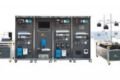
The structural backbone of the YL-335C is an industrial-grade aluminum alloy bench measuring 2000 mm x 960 mm x 1760 mm, operating on single-phase AC 220V +/-10% 50Hz power with total apparent power within 3.0 kVA. This platform mirrors a discrete smart factory production line through five integrated workstations: Storage, Assembly, Machine Vision, Sorting, and Conveying. The Storage unit handles automated warehousing and retrieval of raw stock via multi-tier racking and mechanical loading mechanisms, while the Assembly unit performs precise part alignment and pneumatic press-fitting of internal core components. The Machine Vision unit conducts automated optical inspection of workpiece surfaces, and the Sorting unit uses directional pneumatic diverters and dynamic drop chutes to classify finished goods. The Conveying unit ensures continuous multi-point transfer across all stations, creating a seamless production flow.
Also worth a look: YALONG CNC trainers close the gap between classroom theory and factory-floor machining and HandicapMD clarifies Alabama disability permit process amid new 2026 placard design.
Machine Vision Quality Inspection and Optical Sensing
Modern automated assembly lines demand rigorous quality control, which is where the YL-335C’s visual unit comes into play. It integrates an industrial digital camera with dedicated image processing software to inspect workpiece attributes, passing states, color profiles, and dimensional tolerances in real time. This vision system is complemented by a network of diffuse-reflective photoelectric switches, high-frequency inductive proximity sensors, and capacitive detectors positioned along the material conveyance path. These sensor outputs feed directly into station PLCs via digital I/O lines and industrial fieldbus links, allowing the system to verify workpiece material composition—distinguishing between ferromagnetic metals, aluminum alloys, and synthetic polymers—before triggering automated diversion or robotic assembly sequences. Trainees gain hands-on experience in optical alignment and threshold calibration, essential skills for any automation engineer.
Articulated Industrial Robotics and Multi-Axis Material Handling
The platform integrates an industrial articulated robot fitted with multi-function pneumatic grippers to execute complex workpiece manipulation between storage racks, vision testing fixtures, and assembly stations. Students learn to program robotic tool center points (TCP), user coordinate frames, kinematic motion trajectories, and pick-and-place routines using handheld teach pendants or offline simulation software. The conveying station adds a precision servo-driven linear slide combined with multi-position pneumatic rotary actuators, giving students practical experience in robot-PLC handshaking, multi-axis motion synchronization, electronic gear ratios, and mechanical axis alignment under production constraints.
Distributed PROFINET Industrial Network Topology
Authentic industrial Ethernet networking is critical for competition and factory environments, and the YL-335C delivers via a distributed PLC control architecture interconnected through high-speed PROFINET communication protocols. In this setup, the conveying station PLC acts as the master coordination node, exchanging real-time status words, I/O bit tables, execution triggers, and safety interlocks with slave PLCs at the storage, assembly, vision, and sorting stations. A 7-inch color Human-Machine Interface (HMI) touchscreen displays live production metrics, station alarm registers, cycle completion times, and system operational parameters. Students configure network IP tables, PROFINET device names, communication update times, and distributed interlocking logic, building expertise in industrial networking and multi-PLC synchronization.
Cloud-Native MES Scheduling and Cyber-Physical Digital Twin Simulation
For advanced smart factory digitalization, the YL-335C connects to a cloud-native Manufacturing Execution System (MES) and 3D digital twin virtual commissioning software. The MES simulates the complete enterprise manufacturing cycle—from customer web order intake down to automated raw material requisition, production dispatching, quality tracking, and warehouse inventory logging. Simultaneously, the 3D digital twin environment models the exact kinematic geometry, pneumatic actuation, sensor feedback, and PROFINET communication of the physical machine. Trainees validate PLC ladder code, HMI screens, and robot trajectories in the virtual environment before downloading programs to physical hardware, a process that accelerates learning concurrency, reduces equipment wear, and standardizes competition skill assessments.
Commercial Procurement Value and Factory-Direct Integration
Direct factory delivery of the YL-335C integrates five discrete manufacturing stations into a unified PROFINET and CC-Link automation cell within the 2000 mm x 960 mm x 1760 mm footprint. Factory-direct engineering ensures native compatibility across AC servo drives, multi-spectral optical sensors, and cyber-physical digital twin interfaces. Technical universities and vocational institutes benefit from eliminating intermediary markups while receiving complete engineering deliverables, including PLC ladder source code, 3D simulation models, electrical schematics, and certified instructor coaching. This turnkey approach accelerates laboratory commissioning and equips students with WorldSkills-aligned mechatronic competencies.
For those seeking technical documentation, laboratory layout schematics, and modular curriculum frameworks, the official YALONG international portal provides full access: https://www.yalongeducation.com/
Yalong Intelligent Equipment Group Co., Ltd.
YALONG
Visit us on social media:
Facebook
YouTube
Why it matters: As global manufacturing races toward smart factories, the gap between academic training and industry-ready skills remains a critical bottleneck. By bringing competition-grade, WorldSkills-standard equipment into classrooms, YALONG is helping vocational institutes and universities produce graduates who can step directly onto the factory floor and command advanced automation systems—a shift that could redefine how technical education aligns with the future of work.