Hospitals are drowning in operational complexity—bed shortages, emergency room bottlenecks, and fragmented patient data—and a new market forecast suggests technology is stepping in fast. The Business Research Company projects the global hospital command center software sector will surge to $3.59 billion by 2030, a clear signal that healthcare leaders are betting big on digital coordination tools.
Hospital Command Center Software Market growth
Hospital Command Center Software Market segments
Also worth a look: Ravi Shanker: Bridging telecom scale and distributed data security and Salesforce’s $5.7B Braze deal signals guest data is restaurants’ new crown jewel.
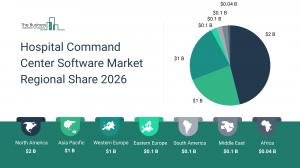
The Business Research Company’s Hospital Command Center Software Global Market Report 2026 – Market Size, Trends, And Forecast 2026-2035
LONDON, GREATER LONDON, UNITED KINGDOM, October 26, 2026 /EINPresswire.com/ — The Hospital Command Center Software market is undergoing rapid transformation as healthcare providers seek smarter ways to oversee sprawling operations. As hospitals embrace digital and data-centric workflows, this niche is set for substantial expansion in the years ahead. Examining market valuation, geographic leadership, major competitors, and shifting trends offers a clearer view of the sector’s trajectory.
Hospital Command Center Software Market Size and Relation to Broader Healthcare Markets
The Hospital Command Center Software market is projected to surpass $4 billion by 2030. This segment represents a modest yet meaningful slice of the larger Smart Hospital market, which is anticipated to reach approximately $190 billion in the same timeframe. Within the expansive Healthcare Services industry—expected to hit $11,335 billion in 2030—Hospital Command Center Software will account for roughly 0.03% of overall value.
Request A Free Sample Of The Hospital Command Center Software Market Report
https://thebusinessresearchcompany.com/sample_request?id=91940237&type=smp&name=Hospital%20Command%20Center%20Software%20Market%20Report%202026&utm_source=EINPresswire&utm_medium=Paid&utm_campaign=Oct_PR
North America’s Leading Role in Hospital Command Center Software by 2030
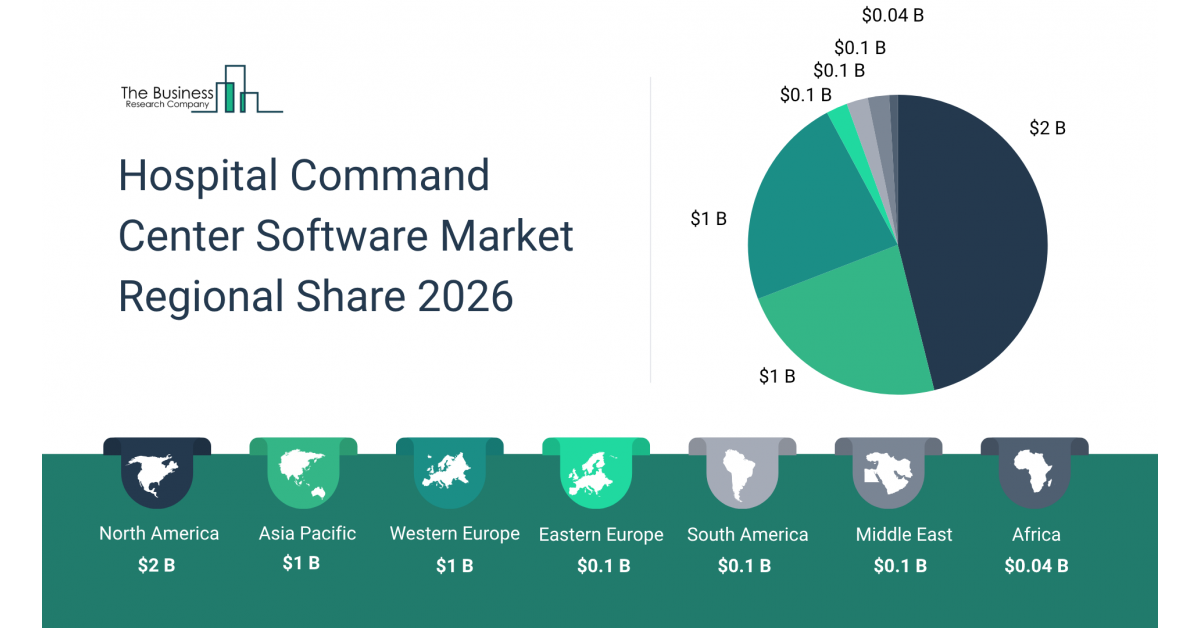
By 2030, North America is expected to lead the Hospital Command Center Software market, valued at $1.7 billion. The sector is climbing from an estimated $1.1 billion in 2025 at a compound annual growth rate (CAGR) of 10%. This momentum stems from growing adoption of centralized healthcare management systems, increasing demand for real-time performance monitoring, smoother patient throughput, fewer operational delays, and expanding smart hospital projects across the USA and Canada. Investments in predictive analytics, clinical intelligence, and broader digital health modernization are also fueling the rise.
United States as the Top Country in the Hospital Command Center Software Market
The United States is poised to remain the largest national market, projected at $1.5 billion in 2030. Growing from $1.0 billion in 2025 with a CAGR of 9%, US expansion is driven by the push for integrated hospital operations platforms, efficient emergency department workflows, and advanced bed management tools. The shift toward value-based care models and heightened focus on clinical coordination and care delivery efficiency are encouraging healthcare systems to channel resources into digital infrastructure and command center technologies.
Access The Detailed Hospital Command Center Software Market Report Here
https://thebusinessresearchcompany.com/report/hospital-command-center-software-market-report?utm_source=EINPresswire&utm_medium=Paid&utm_campaign=Oct_PR
Dominance of the Software Segment Within Hospital Command Center Software Market
By component, the software segment is set to capture the largest share of the Hospital Command Center Software market, representing 69%—roughly $2 billion—in 2030. Software demand is rising due to the need for real-time hospital visibility, centralized decision-support platforms, AI-driven operational intelligence, automated patient flow management, workforce optimization, and interoperability solutions that link electronic health records across systems. Ongoing healthcare technology advancements are pushing innovation, helping hospitals cut inefficiencies and make better use of resources.
How Deployment and Application Categories Define the Market
The Hospital Command Center Software market is divided by deployment mode into two primary categories: on-premises and cloud-based solutions. On the application side, the market spans patient flow management, resource allocation, bed management, emergency response, operational analytics, and other specialized functions. End users include hospitals, specialty clinics, ambulatory surgical centers, and additional healthcare settings.
Projected Growth Rate Leading Up to 2030
The global Hospital Command Center Software market is expected to grow at a robust CAGR of 14% through 2030, reflecting rising investments, technology uptake, and expanding use cases in healthcare operations.
Key Factors Accelerating Market Growth
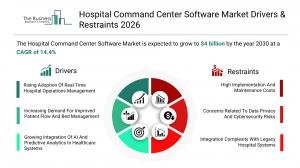
Growing adoption of real-time hospital operations management is a key catalyst for this market. Hospitals are prioritizing operational visibility and efficiency while managing intricate workflows involving patients, staff, and equipment. Command center software enables centralized tracking of admissions, bed occupancy, emergency department activity, and workforce availability, helping cut delays and optimize resources. This adoption is likely to contribute around 2.7% of annual market growth.
Demand for better patient flow and bed management is another major driver. Hospitals frequently contend with overcrowding and inefficient bed allocation, which undermine care quality. Command center software offers real-time data on bed availability and patient status, streamlining admissions and discharges, reducing emergency room wait times, and preventing bottlenecks. This demand is projected to add roughly 2.5% in annual growth.
The integration of artificial intelligence (AI) and predictive analytics further accelerates market expansion. AI-powered platforms analyze operational data to forecast patient admissions, anticipate resource shortages, and flag potential delays before they occur. These intelligent systems enable hospitals to manage workflows proactively, improve care delivery, and lower costs. AI-driven alerts help prioritize critical tasks and respond quickly to patient needs, contributing around 2.3% in annual growth.
Growth Prospects Within Software and Services Segments
The software and services sectors present the largest opportunities in this market, with combined expectations to exceed $2 billion by 2030. Growth in these areas is underpinned by rising adoption of centralized command centers for hospital coordination, workflow automation, operational analytics, and digital transformation initiatives. Expansion of remote monitoring, virtual care, scalable solutions for multi-site networks, and advancements in cloud-based health technologies are also driving progress.
Between 2025 and 2030, the software market is forecast to grow by approximately $1 billion, with services seeing a comparable increase. The market is influenced by leading healthcare IT providers and niche clinical operations software vendors focused on real-time patient flow, predictive analytics, data visualization, and AI-powered decision support. Their work emphasizes interoperability, emergency response optimization, data security, and regulatory compliance—critical factors for maintaining a competitive edge.
Top Companies Influencing the Hospital Command Center Software Market
A range of global firms hold significant positions in the Hospital Command Center Software market. TeleTracking Technologies Inc. led with a 2% market share in 2025, offering comprehensive solutions for real-time patient flow management, capacity optimization, predictive analytics, and integrated command center platforms. Other major players include GE HealthCare Technologies Inc., Koninklijke Philips N.V., Siemens Healthineers AG, Epic Systems Corporation, Oracle Corporation, Qventus Inc., LeanTaaS Inc., Palantir Technologies Inc., and Care Logistics LLC.
Market Fragmentation and Competitive Landscape
The market is moderately fragmented, with the top 10 companies accounting for 17% of total revenues in 2025. Entry barriers include complex healthcare IT integration, strict patient data security, regulatory compliance, interoperability challenges, and the need for real-time operational reliability in critical care settings. Leading companies sustain their positions through diversified healthcare IT offerings, established hospital partnerships, global deployments, and continuous innovation in command center and operational intelligence platforms. As demand grows for optimized patient flow, predictive analytics, and AI-enabled hospital management, competition is expected to intensify through strategic collaborations, new product development, and regional expansion.
Key Raw Material and Technology Suppliers in the Market
Critical technology and raw material suppliers supporting this market include Epic Systems Corporation, Cerner Corporation, Philips Healthcare, GE HealthCare Technologies Inc., Siemens Healthineers AG, Oracle Corporation, Microsoft Corporation, Amazon Web Services Inc., IBM, Salesforce Inc., ServiceNow Inc., Cisco Systems Inc., Johnson Controls International plc, Medtronic plc, Baxter International Inc., Hill-Rom Holdings Inc., Stryker Corporation, McKesson Corporation, Abbott Laboratories, Teladoc Health Inc., Veradigm Inc., Dedalus S.p.A., Allscripts Healthcare Solutions Inc., Change Healthcare Inc., and Infor Inc.
Important Wholesalers and Distributors Serving the Market
Major wholesalers and distributors facilitating Hospital Command Center Software distribution include Cardinal Health Inc., AmerisourceBergen Corporation, Owens and Minor Inc., Medline Industries LP, Henry Schein Inc., Vizient Inc., Premier Inc., Vizient Supply Chain Solutions, Intalere Inc., HealthTrust Purchasing Group, Provista Inc., Concordance Healthcare Solutions LLC, Bound Tree Medical LLC, Moore Medical LLC, Midwest Medical Supply Company, MedAssets Inc., GHX Global Healthcare Exchange, VHA Inc., Novation LLC, Amerinet Inc., and Cardinal Health Specialty Solutions.
Primary End Users Driving Demand
Notable healthcare organizations adopting Hospital Command Center Software encompass Mayo Clinic, Cleveland Clinic, Johns Hopkins Hospital, Massachusetts General Hospital, Stanford Health Care, Mount Sinai Health System, Kaiser Permanente, NewYork-Presbyterian Hospital, HCA Healthcare Inc., Providence Health and Services, Ascension Health, Intermountain Healthcare, Mayo Clinic Health System, Banner Health, University of California San Francisco Health, University of Michigan Health System, Northwell Health, Baylor Scott and White Health, Cedars-Sinai Medical Center, Duke University Health System, Memorial Sloan Kettering Cancer Center, University of Pittsburgh Medical Center, Sutter Health, Froedtert Health, and Henry Ford Health System.
Emerging Competitive Trends in the Market
Real-time predictive analytics is reshaping hospital command centers by boosting operational efficiency, optimizing patient flow, and supporting clinical decision-making. For example, in October 2024, GE HealthCare Technologies Inc. released its Hospital Pulse Tile feature for command center software, which integrates real-time predictive analytics. This tool converts complex hospital data into actionable insights, enabling proactive interventions, better resource use, and reduced delays in care delivery.
Strategies Companies Are Pursuing to Stay Competitive
Leading market players are concentrating on several key strategies: enhancing real-time hospital command center software to improve coordination and visibility; leveraging AI analytics to boost patient flow and resource management; expanding interoperable healthcare infrastructure to strengthen data integration; and integrating intelligent monitoring systems to improve emergency response and overall performance. These approaches aim to maintain market leadership and drive innovation in this fast-evolving sector.
Our 2026 reports feature deeper market intelligence with market attractiveness scoring and analysis, total addressable market (TAM) analysis, company scoring matrix graphics and tables, Excel-based forecasting dashboards, market hotspots infographics, key technologies and future trend analysis, and updated graphics and tables.
Learn More About The Business Research Company
The Business Research Company (www.thebusinessresearchcompany.com) is a leading market intelligence firm renowned for its expertise in company, market, and consumer research. We have published over 30,000+ reports across 27 industries and 60+ geographies. Our research is powered by 1,500,000 datasets, extensive secondary research, and exclusive insights from interviews with industry leaders.
We provide continuous and custom research services, offering a range of specialized packages tailored to your needs, including Market Entry Research Package, Competitor Tracking Package, Supplier & Distributor Package and much more.
Disclaimer: Please note that the findings, conclusions and recommendations that TBRC Business Research Pvt Ltd delivers are based on information gathered in good faith from both primary and secondary sources, whose accuracy we are not always in a position to guarantee. As such TBRC Business Research Pvt Ltd can accept no liability whatever for actions taken based on any information that may subsequently prove to be incorrect. Analysis and findings included in TBRC reports and presentations are our estimates, opinions and are not intended as statements of fact or investment guidance.
Contact Us:
The Business Research Company
Americas +1 310-496-7795
Europe +44 7882 955267
Asia & Others +44 7882 955267 & +91 8897263534
Email: marketing@tbrc.info
Follow Us On:
LinkedIn: https://in.linkedin.com/company/the-business-research-company
Oliver Guirdham
The Business Research Company
+44 7882 955267
info@tbrc.info
Visit us on social media:
LinkedIn
Facebook
X