Returning to IACP 2026 after a memorable debut, Charlie brings 24/7 assistance in more than 90 languages to police front desks
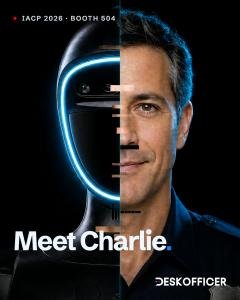
The robot that turned heads at last year’s police chiefs’ conference is back — but it no longer needs a body to make an impression. DeskOfficer, Inc. has unveiled a life-size holographic version of Charlie, its AI digital employee built for government front desks, and it’s available to police departments and sheriffs’ offices starting today. The new incarnation makes its first public appearance at Booth 504 during the International Association of Chiefs of Police (IACP) Annual Conference and Exposition in Orlando.
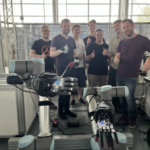
At IACP 2025 in Denver, Charlie was the showstopper in a different form. As DeskOfficer’s first humanoid robot, it worked the exhibit hall floor, shaking hands, snapping selfies and drawing crowds so thick that aisles became impassable. Police chiefs grabbed their phones to capture the moment, and rival vendors abandoned their own booths just to get a closer look.
Also worth a look: Arizona startups get $190K to speed AI grid tools and smart helmets to market and TriCoast ATS bets on AI to outproduce Hollywood with 35+ films a year.
This year, the company has reimagined Charlie entirely. The robot is now a life-size hologram that agencies can deploy directly in their own lobbies. It runs on the same DeskOfficer platform that already manages non-emergency and administrative calls for public safety agencies, but now brings that capability face to face with residents instead of keeping it on the phone.
“Charlie made a real impression at IACP last year, and we wanted to build on that,” said Kushyar Kasraie, CEO of DeskOfficer. “His new form lets agencies put him where residents already go, so they can walk up, speak in their language and get help at any hour. Come by and say hello. He’ll answer.”
What Charlie does for an agency
Charlie is designed to take on routine, non-emergency inquiries based on rules that each agency sets for itself. When a request needs a human touch, staff are brought into the conversation. For genuine emergencies, Charlie’s guidance is simple: call 911.
* In person, around the clock. Charlie can be stationed in a lobby or at a station entrance, giving residents a way to get help even after the staffed counter has closed for the day.
* Natural conversation in more than 90 languages. Residents can speak in their native language and ask follow-up questions without having to navigate phone menus or wait for a translator.
* Connected to agency systems. Charlie pulls from the agency’s own information and connected systems to provide answers and route requests to the appropriate person.
* Beyond the lobby. The DeskOfficer platform isn’t limited to the hologram — it also handles phone calls, web chat, text and email interactions.
Meet Charlie at IACP 2026
Conference attendees can see Charlie in person at Booth 504 during the IACP 2026 exposition, running October 25–27 at the Orange County Convention Center in Orlando, Florida. Visitors can walk right up, address him in their own language and watch how he manages the kinds of conversations that typically come through a front desk every day.
A teaser film introducing the new Charlie is available at https://youtu.be/Iwvg5HQYESg. Agencies interested in bringing Charlie to their facilities can learn more and start the conversation at deskofficer.ai.
About DeskOfficer
DeskOfficer, Inc. creates AI digital employees for the government sector. Its platform manages non-emergency and administrative conversations for public safety agencies, drawing on agency information and connected systems while operating under rules each department defines. The company also produces 911Translate, an AI-powered language line for dispatch centers, which it recently reported is now live at more than 100 agencies. Additional details are available at deskofficer.ai.
Media Contact
DeskOfficer, Inc.
media@deskofficer.ai
—
**Why it matters:** Moving Charlie from a physical robot to a hologram signals a practical shift in how AI can serve the public sector — no hardware to maintain, just a presence that can be deployed wherever residents already gather. As agencies face staffing shortages and language barriers, this kind of always-on, multilingual assistance could redefine what a front desk looks like in the years ahead.