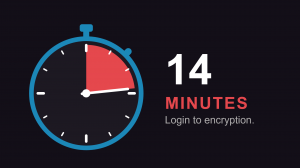
If a cyberattack can run its entire course in the time it takes to drink a cup of coffee, what good is a rapid response team? That is the uncomfortable question facing security professionals after a reported breach in which more than 30 AI agents executed a complete attack in just 14 minutes — and the victim did not notice for another four and a half hours.
Reported agent-swarm breach went from login to encryption before it was detected; Morphisec urges organizations to adopt prevention without a human in the loop
Morphisec, a company that describes itself as the leader in preemptive cybersecurity, issued a stark call to action today. The New York-based firm is urging security teams to fundamentally rethink their dependence on detection and response models after a reported incident that underscores how AI has compressed the timeline of an attack to a matter of minutes.
Also worth a look: XIAOWEI breaks down the pad-mounted vs pole-mounted transformer choice for North American grids and Middle East oil and gas transformers must withstand 55°C heat and grid faults, Xiaowei says.
The incident was described publicly on Nov. 19 by Dave Kennedy, founder of the cybersecurity firm TrustedSec, during an interview with CNN. Kennedy said he was responding to a breach in which attackers deployed more than 30 AI agents simultaneously. According to his account, the agents logged in using valid credentials, identified and exploited a vulnerability that allowed them to bypass two-factor authentication, stole data, and then encrypted the company’s file system. The victim did not detect the intrusion for approximately four and a half hours. While the account has not been independently verified, it follows a pattern seen over the past year: AI is dramatically shortening attack timelines. This September, for example, an attacker used AI agents to compress what would have been a two-week operation into fewer than 10 hours.
Fourteen minutes is the number people will remember, but four and a half hours is the one that matters. That’s how long the attack went unseen.”— Daniel Alima, Vice President Research and Technology at MorphisecNEW YORK, NY, UNITED STATES, November 21, 2026 /EINPresswire.com/
“Fourteen minutes is the number people will remember, but four and a half hours is the one that matters. That’s how long the attack went unseen. And even a perfect alert wouldn’t have saved them: when the whole kill chain finishes in fourteen minutes, no team can triage and respond in time. Prevention has to stop the attack on its own, without waiting for anyone to notice,” said Daniel Alima, Vice President Research and Technology at Morphisec.
Morphisec outlined three key lessons for defenders drawn from the incident:
- Fast response doesn’t help when the attack is faster. When an attack runs at machine speed, any control that depends on a person noticing, deciding, and acting arrives after the damage. Controls that stop attacks must act automatically.
- Parallelism changes attacker economics. Dozens of agents probing at once find the one exploitable flaw in minutes, not days. That makes continuous exposure reduction more urgent than periodic assessment.
- The endgame hasn’t changed. However fast the front end moved, the attack still ended in exfiltration and encryption. Stopping ransomware at the impact stage works regardless of how quickly an attacker got there.
“AI has changed how attackers get in. It hasn’t changed what they have to do to get paid. They still have to encrypt real systems, and that’s a step prevention can stop no matter who or what is at the keyboard,” added Alima.
Morphisec’s preemptive security platform is built around Automated Moving Target Defense (AMTD) and three pillars that map to these lessons: Adaptive Exposure Management to continuously reduce exploitable gaps, Infiltration Protection to block attack techniques automatically, and Impact Protection to stop ransomware before it encrypts. Together, they are designed to stop attacks at machine speed without waiting for an alert to be read.
Morphisec’s full analysis of the incident is available on the Morphisec blog: [blog link].
About Morphisec
Morphisec is a global leader in prevention-first security for the AI era. Founded in 2014 and headquartered in New York, Morphisec stops ransomware, zero-day exploits, fileless attacks and rogue AI agents in memory; the one layer every attack must pass through to execute. Morphisec protects more than nine million endpoints across finance, healthcare, manufacturing and technology, and backs its protection with a Ransomware-Free Guarantee. Learn more at www.morphisec.com.
Jeff Anderson
Morphisec
+1 617-826-1212
Visit us on social media:
LinkedIn
X
Why it matters: This incident signals a fundamental shift in the cybersecurity landscape: when attackers can operate at machine speed, human-in-the-loop response becomes obsolete. Organizations must now prioritize automated prevention that can stop an attack before it finishes — not just detect it after the damage is done.