For engineers designing smaller, more powerful electronics, the humble ceramic capacitor has become a silent bottleneck. As devices shrink and energy demands rise, the very materials that enable high capacitance also introduce a ticking clock of electrical instability. This engineering paradox—where initial performance masks a slow decline—is now being addressed at the microscopic level by a specialized manufacturer, Ruisheng, whose work in powder chemistry and thermal control could redefine reliability standards for passive components.
ZHANGZHOU, FUJIAN, CHINA, November 7, 2026 /EINPresswire.com/ — Modern electronic engineering continuously pushes boundaries toward miniaturization, higher energy density, and enhanced circuit efficiency across global markets. Within this technological evolution, ceramic capacitors remain indispensable components for power filtering, transient suppression, decoupling, and energy storage across consumer electronics, industrial automation, and renewable energy systems. However, achieving high volumetric efficiency often introduces a complex engineering paradox. As designers pursue higher capacitance in smaller footprints, maintaining long-term electrical stability becomes exceptionally challenging under fluctuating operational loads. Addressing this foundational industry challenge requires specialized expertise from an advanced High Permittivity Ceramic Powder Manufacturer capable of controlling material behavior at the microscopic level. Without rigorous compositional control and precise microstructural engineering, electronic systems risk unexpected capacitance drops, signal distortion, and premature field failures. Consequently, advanced material science and stringent quality control have emerged as primary differentiators for reliable passive component manufacturing.
The High-Permittivity Paradox and the Quest for Long-Term Stability
Also worth a look: Ruisheng urges buyers to look beyond price when sourcing zinc oxide and thermistor powders and Ruisheng details how silver vs copper metallization makes or breaks varistor reliability.
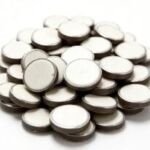
The pursuit of high permittivity materials drives modern capacitor development. High-K dielectric ceramics allow manufacturers to pack significantly more capacitance into compact disc geometries without expanding physical footprints. Nevertheless, this advantage introduces inherent physical vulnerabilities. High permittivity formulations often exhibit heightened sensitivity to external operating stresses, including electric field intensity, ambient temperature variations, and mechanical loads. Engineers frequently encounter a trade-off where maximizing initial capacitance sacrifices operational stability over time. Resolving this paradox demands a shift in focus from mere post-production sorting to fundamental material science. Quality control must begin at the powder synthesis stage, where crystal structures and dopant distributions are established. By refining powder characteristics, manufacturers neutralize degradation triggers before the ceramic body is even formed. This proactive approach establishes a robust foundation for high-performance circuit protection and energy management.
Dissecting the Root Causes of Capacitance Loss: DC Bias, Thermal Drift, and Aging
Electronic circuits operate in dynamic environments where multiple degradation factors converge. Understanding why components experience capacitance loss is essential for robust circuit design. As explored in technical analyses such as Why Your Ceramic Capacitors Are Quietly Losing Capacitance and How to Fix It, degradation typically stems from three primary mechanisms: DC bias voltage, thermal drift, and natural logarithmic aging. When a direct current voltage is applied to high-K ceramic bodies, domain wall mobility is restricted, causing effective permittivity to decline sharply. Temperature fluctuations further exacerbate this instability, particularly in Class II dielectric formulations like X7R or Z5U, where capacitance swings wildly outside narrow thermal bands. Furthermore, ferroelectric materials undergo spontaneous domain relaxation over time, leading to gradual logarithmic capacitance decay even under constant storage conditions. Recognizing these degradation pathways enables engineers to select superior material grades and design circuits with wider safety margins.
Material-Level Quality Control: Advanced Powder Formulation and Grain Boundary Engineering
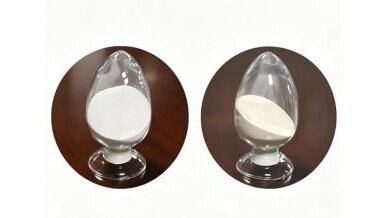
Quality control in ceramic component production starts long before shaping or firing. It begins with precise chemical formulation and advanced powder synthesis. Superior dielectric performance relies heavily on achieving uniform particle size distribution, controlled specific surface area, bulk density, and optimal moisture content. Impurities or uneven compositional distribution create localized microstructural defects, which accelerate electrical breakdown and leakage current under stress. Advanced production methodologies utilize specific dopants to pin grain boundaries, restricting abnormal grain growth during high-temperature thermal processing. This grain boundary engineering effectively stabilizes the crystal lattice against external electric field fluctuations, mitigating DC bias sensitivity. By maintaining strict stoichiometric accuracy across every production batch, manufacturers ensure consistent dielectric constants and predictable thermal behavior, providing circuit designers with highly dependable raw material foundations.
Precision Sintering Control: Translating Superior Powder into Microstructural Integrity
Even the highest quality powder formulation fails if thermal processing parameters are inadequately controlled. Sintering transforms green ceramic compacts into dense, mechanically robust capacitor discs. This critical phase requires exact management of peak firing temperatures, soaking durations, and furnace atmospheric conditions. Minor temperature variances across the kiln can induce porosity, micro-cracks, or non-uniform density distributions, directly undermining electrical endurance. Sophisticated thermal profiling ensures that densification occurs uniformly throughout the ceramic body, optimizing mechanical strength and dielectric strength simultaneously. Advanced firing protocols also prevent secondary phase formation, which typically degrades insulation resistance and triggers premature dielectric failure. Through meticulous thermal control, production facilities translate superior chemical powders into flawless microstructures capable of enduring harsh industrial operational voltages without degradation.
From Raw Materials to Finished Components: The Ruisheng Product Ecosystem
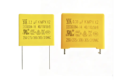
Vertical integration and comprehensive manufacturing capabilities separate ordinary suppliers from industry leaders. Ruisheng (Fujian Ruisheng Electronic Technology Co., Ltd) exemplifies this integrated approach by maintaining strict quality oversight across the entire production continuum, from raw chemical synthesis to finished electronic components. Operating under the short name Ruisheng, the enterprise delivers a diverse portfolio designed to meet rigorous international standards. The product ecosystem encompasses advanced electronic ceramic materials, specialized ceramic capacitor chips, and robust ceramic disc capacitors. Within this extensive lineup, standardized series such as CC1, CT1, CC81, and CT81 address specific high-voltage, high-frequency, and general-purpose circuit requirements. By controlling every intermediate manufacturing stage, Ruisheng ensures that each finished disc retains the structural integrity and electrical stability engineered into its foundational powder formulations, supporting demanding applications worldwide.
Partnering for Reliability: Quality Assurance and Custom Engineering Support
Achieving long-term circuit reliability requires more than standard off-the-shelf components; it demands rigorous quality assurance and collaborative technical support. Modern procurement engineers evaluate suppliers based on batch consistency, compliance verification, and responsive engineering assistance. Comprehensive testing protocols-ranging from voltage gradient checks and dissipation factor measurements to accelerated life testing-validate component performance under extreme operational conditions. Additionally, adherence to strict environmental standards such as RoHS and REACH ensures global market compliance. Collaborative engineering partnerships allow manufacturers to tailor dielectric properties and physical dimensions to unique application requirements. Whether optimizing power supplies, smart grid infrastructure, or industrial motor controls, selecting a technically proficient manufacturing partner minimizes development risks and accelerates time-to-market. Ultimately, continuous refinement in powder synthesis, thermal processing, and quality validation empowers the electronics industry to build safer, more durable, and highly efficient electronic systems for the future.
Website:https://www.ruishengdz.com/.
Ruisheng
Ruisheng
Why it matters: As the electronics industry pushes further into miniaturization and higher energy density, the reliability of passive components like ceramic capacitors can no longer be taken for granted. Ruisheng’s focus on controlling degradation at the powder level—rather than just testing finished parts—offers a blueprint for building more durable systems. For engineers and procurement teams, this signals that material science, not just component specs, is becoming the decisive factor in long-term circuit performance.