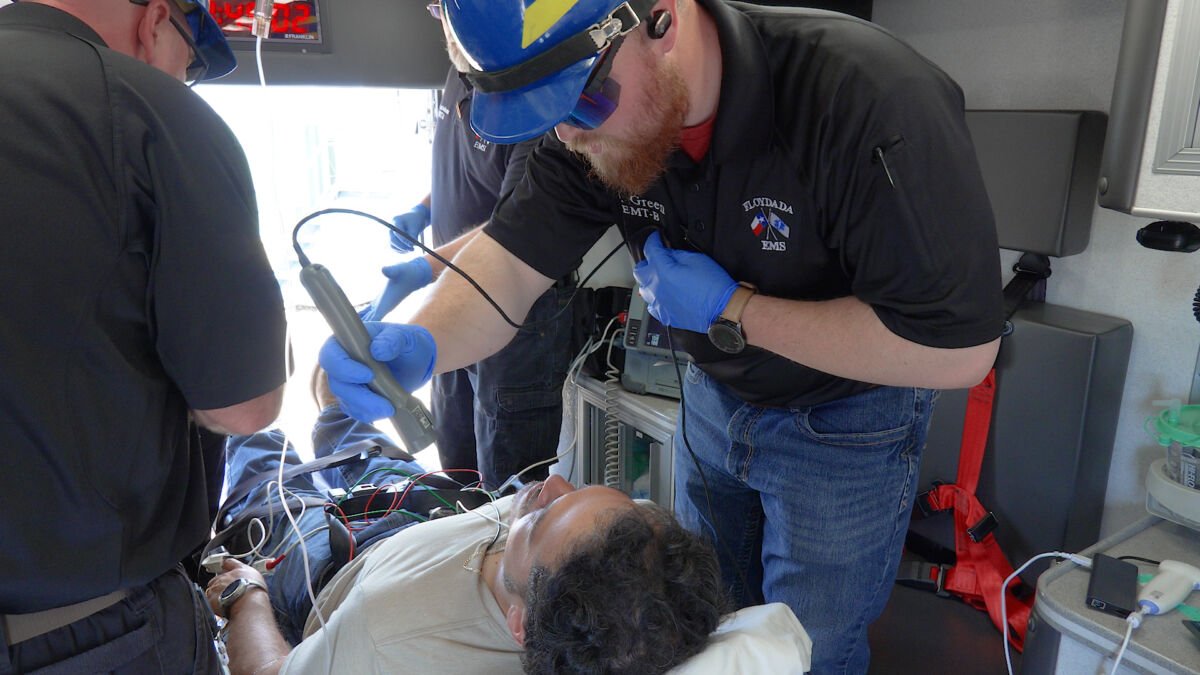
In the sprawling, isolated stretches of West Texas, where the nearest major hospital can be hours away, a new breed of emergency response is packing high-tech care into a suitcase. The Texas Tech University Health Sciences Center (TTUHSC) is equipping rural EMS teams with portable telehealth kits that allow paramedics to stream live patient data and video directly to emergency room physicians, fundamentally changing how remote medical emergencies are handled.
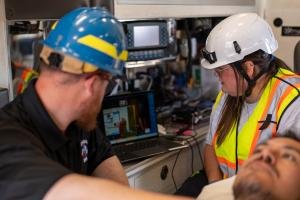
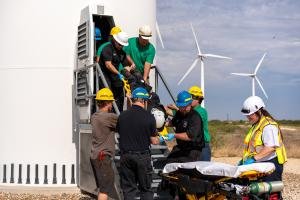
Wind energy technicians recently joined forces with TTUHSC for a drill that simulated a heat exhaustion emergency, testing the limits of this new technology.
A Floydada EMS crew was captured using the university’s Next Generation 9-1-1 kit during the training exercise.
Also worth a look: Leqembi market poised for explosive growth as Alzheimer’s cases in Europe set to double by 2030 and Based Trading Cards lands on HoloHoard to give collectors real-time serial tracking and value tools.
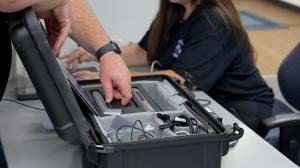
Here is a closer look at the TTUHSC Next Generation 9-1-1 kit itself.
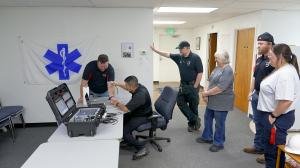
West Texas EMS teams are using TTUHSC’s new Next Generation 9-1-1 telehealth technology to stream patient data to ER doctors, shortening vital response times.
“Being in a rural community so far out from a major hospital, just having that ability to reach out to a physician and have them on camera to see what we’re seeing is invaluable.” — Katrina Gooch, director of Floydada EMS
LUBBOCK, TX, UNITED STATES, November 5, 2026 /EINPresswire.com/ — The vast West Texas landscape is dotted with towering wind farms, where turbines stand more than 300 feet tall. These structures pose significant hazards for the workers who maintain them. Recently, wind farm site lead Enrique Mendez and his team of technicians collaborated with the Texas Tech University Health Sciences Center (TTUHSC) on a drill designed to mimic a heat exhaustion emergency at a local wind farm. This simulation provided Floydada EMS, along with the fire department and sheriff’s office, a chance to test their emergency readiness using equipment supplied by the Next Generation 9-1-1 project.
The TTUHSC F. Marie Hall Institute for Rural and Community Health secured a contract with the Commission on State Emergency Communications (CSEC) to launch the Next Generation 9-1-1 Telemedicine Medical Services and Telehealth Services Pilot Project. Designed to revolutionize emergency care across vast distances, the initiative has already surpassed its initial goal of enrolling five rural Emergency Medical Service (EMS) sites. Currently, eight Texas sites are actively participating, with plans for further expansion already in motion.
Participating rural EMS providers receive specialized, rugged suitcases from TTUHSC that are packed with high-tech portable telehealth equipment. Each kit contains a laptop pre-configured for secure video consultations, an ultrasound machine, an EKG device, an exam camera, an otoscope, a stethoscope, a health monitor, a pulse oximeter, a thermometer, and a priority signal hotspot to maintain connectivity in even the most remote locations. Beyond just providing the gear, TTUHSC delivers comprehensive training, protocol reviews, guidance on data reporting, and specialized instruction tailored to each participating trauma facility.
“The kit has a lot of different peripheral devices — it’s all telehealth equipment,” explained Carson Scott, TTUHSC assistant vice president of Rural and Community Health, Division of Rural Affairs. “Where an assessment typically might be just through a verbal discussion over the radio, we’re now able to provide a full-blown visual and data assessment to help physicians make better clinical decisions. This medical direction helps limit transport times across the miles and miles that separate rural patients from their destinations.”
The pilot project zeroes in on three critical areas: emergency care, prehospital care, and trauma care. In urgent situations, the system enables emergency medical personnel—whether they are in the field or en route to the hospital—to connect directly with emergency department physicians. This immediate link allows hospital staff to guide treatment in real time and prepare operating rooms or trauma bays well before the ambulance arrives.
For local providers, this capability is especially crucial when responding to emergencies in rugged rural environments. Katrina Gooch, director of Floydada EMS, pointed out that rural first responders face unique challenges, including rescues in canyon terrain, incidents involving livestock, and emergencies at wind farms.
“We’re dealing with different terrain than what you would see in a city,” Gooch said. “So it makes it a little more challenging at times. Being in a rural community so far out from a major hospital, just having that ability to reach out to a physician and have them on camera to see what we’re seeing is invaluable. If someone has internal bleeding from a fall, we can use the sonogram to connect with medical direction, look for fluid or a collapsed lung, and notify the trauma center. The hospital is waiting and fully informed by the time the patient arrives, speeding up the process for surgery.”
Injuries among windmill farm workers can include falls from heights, electrical burns, and injuries from mechanical or structural failures. To ensure preparedness, participating sites run simulation drills with local industries like wind farms. This particular drill included a connection to the W.J. Mangold Memorial Hospital in Lockney.
“You just never know what will happen, and hopefully we never have to go through a scenario like this in real life,” Mendez said. “This was definitely an experience. Being in the ambulance, with equipment attached to me and being tested, is eye-opening. It can happen to anybody, whether that’s at the wind farm or someone at home.”
Wind turbine technician Brandon Flues highlighted the technology’s importance for industrial safety, noting that crews working on high towers depend heavily on the readiness of local emergency teams. “Whatever they have that’ll benefit any guy who gets injured to save his life, I think, is a plus,” Flues said.
“The project was written for the emergent situation for when you’re way out there in the middle of nowhere,” Scott said. “You now have this equipment and access to a physician in the emergency room. They can help guide you through bad situations, tough situations.”
TTUHSC remains the only institution in Texas executing this specific pilot directly with CSEC. The data and feedback gathered from the current roster of rural sites will help state officials measure the program’s impact and identify opportunities for continued implementation across rural Texas.
EMS agencies interested in participating can contact the TTUHSC Next Generation 9-1-1 at (806) 743-9812 or visit the university’s website for more information.
Suzanna Cisneros
Texas Tech University Health Sciences Center
+1 806-773-4242
Why it matters: This initiative tackles a core inequity in American healthcare—the life-threatening lag in response time for rural patients. By effectively bringing a diagnostic suite and a specialist into the field, the program doesn’t just speed up treatment; it redefines what’s possible for emergency medicine in areas where every mile counts. The success of this pilot could serve as a blueprint for connecting other isolated communities with the life-saving expertise of distant hospitals.