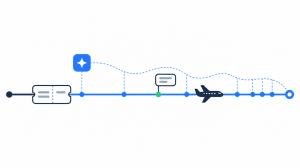
A booking agent’s work usually ends with the confirmation email. Aviationstack gives it live flight status, so it can stay with the traveler through to arrival.
AI booking agents should support travelers beyond ticket confirmation. Real-time flight data helps them track delays, gate changes and cancellations, keeping travelers informed through arrival.”— APILayerAUSTIN, TX, UNITED STATES, October 30, 2026 /EINPresswire.com/ — An AI booking agent handles the booking well. From one request in plain language, it compares fares, holds a seat, books the ticket and sends the confirmation.
Then the conversation ends, and the parts of a trip that go wrong come later. Gates change. Departures slip by an hour, then two. A flight is canceled overnight or diverted on approach. The traveler hears about it from the airline app or the departure board, and the agent that booked the trip has no part in it. Integrating a flight booking API with flight tracking data allows travel applications to keep passengers informed after tickets are issued.
The gap is in the tools. When an agent’s tools only search fares and issue tickets, nothing it can call reads a flight’s status once the booking is done. Asked whether the flight is on time, the agent has only the schedule from the booking to go on.
Aviationstack supplies that status. Its dataset spans more than 13,000 airlines and 10,000 airports, and its real-time flight data updates within 30 to 60 seconds of the source. A lookup by flight number returns one of six statuses: scheduled, active, landed, canceled, diverted or incident. For both the departure and the arrival, it also returns the terminal, the gate, the scheduled, estimated and actual times, and the delay in minutes. While the plane is in the air, the record can also carry its position, altitude and speed. https://apilayer.com/products/aviationstack/
For the agent, that lookup becomes one more tool. It takes the flight number and the date from the booking. The model already does the rest well. It reads the result, compares it with the last check and writes the traveler a short message about what changed.
The agent checks the flight on a schedule, from the day before departure through to arrival. Each check is one request against the plan’s monthly allowance, so the schedule can stay sparse the day before and tighten as departure nears. When the gate, the estimated time or the status changes, the agent tells the traveler. When the status turns to canceled, it can start a rebooking with the booking tools it already has. After landing, the record names the arrival gate and, where the airport publishes it, the baggage claim belt.
Aviationstack is part of the APILayer suite. Each Aviationstack airport record carries the airport’s latitude and longitude, which Weatherstack, also in the suite, turns into the current conditions at the destination. IPstack ships a Model Context Protocol (MCP) server that agents can call directly, and more MCP servers across the suite are coming.
Developers can test Aviationstack on the free plan, which includes real-time flight lookups, at https://aviationstack.com/.
About APILayer
APILayer runs a suite of APIs for developers, including IPstack, Weatherstack, Userstack, Exchangeratesapi, Currencylayer, Aviationstack and Marketstack.
Emiliano Trozzi
APIlayer
+1 512-226-8080
Visit us on social media:
LinkedIn
Instagram
Facebook
YouTube
X
Other
Why it matters: As AI agents take on more travel tasks, their usefulness hinges on data that keeps pace with real-world disruptions. Adding live flight tracking to booking tools closes the loop between purchase and arrival, turning a one-time assistant into a companion for the entire journey — and setting a new baseline for what travelers expect from automation.
Also worth a look: Currencylayer expands to 170+ currencies, adds live bid-ask spread data for finance teams and Aviationstack tells travel apps to stop hard-coding airport lists.