When a startup wins TechCrunch Disrupt’s Startup Battlefield, the follow-up act often determines whether it was a flash in the pan or a genuine force in the making. A year after taking the top prize for its road-to-rail logistics concept, Glīd Technologies has answered that question with a machine that appears to be in a completely different weight class.
Storm Delivers Four Times the Payload Capacity and Ten Times the Exportable Power of Rāden
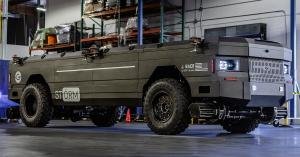
Stōrm was built for missions that don't stay constant”— Kevin A. Damoa, Founder and CEOSAN FRANCISCO, CA, UNITED STATES, October 14, 2026 /EINPresswire.com/ — Glīd Technologies, the reigning champion of TechCrunch Disrupt 2025’s Startup Battlefield, took the stage this week to reveal Stōrm, its latest heavy-duty hybrid road-to-rail platform. The company is positioning the system not merely as a vehicle but as an infrastructure solution aimed at reshaping how commercial freight, military supplies, and critical infrastructure equipment traverse America’s transportation networks.
The unveiling marks a significant escalation for the company, which arrived at last year’s conference with a novel fix for the persistent inefficiencies in first- and last-mile logistics. Now, Glīd has returned to the same venue with a platform engineered for the punishing realities of commercial, industrial, and defense operations, suggesting the company is moving rapidly from concept to deployment.
Stōrm is built to handle 10-foot and 20-foot ISO containers, and the specs are hard to ignore: it offers four times the payload capacity of the company’s earlier Rāden model and ten times its exportable power. The hybrid design merges road and rail mobility with flexible container configurations and onboard power generation, a combination intended for missions where the parameters are shifting constantly.
"Last year, we came to TechCrunch Disrupt with a vision to eliminate one of the biggest inefficiencies in freight transportation: the broken connection between road and rail," said Kevin A. Damoa, Founder and CEO of Glīd Technologies. "Winning Startup Battlefield validated that vision. Today, we're unveiling Stōrm to demonstrate how far we've advanced. We're building more than vehicles. We're creating a new foundation for moving freight, equipment and critical supplies across commercial and defense operations."
Stōrm: One Platform. Multiple Missions.
The design philosophy behind Stōrm is adaptability. Whether it’s a commercial freight terminal, an industrial site, a military logistics hub, or a remote infrastructure project, the platform is meant to fit the job rather than force the job to fit the machine.
The platform combines:
• Heavy-duty container transport: Mission-configurable capability for 10-foot and 20-foot ISO containers.
• Dual-mode mobility: Road-to-rail-to-road transportation designed to reduce costly and time-consuming freight transfers.
• Hybrid power: Integrated propulsion and exportable power for demanding operations.
• Greater capacity: Four times Rāden's payload capacity and ten times its exportable power.
• Mission flexibility: A single platform adaptable to commercial logistics, defense transportation, and critical infrastructure applications.
•
"Stōrm was built for missions that don't stay constant," added Damoa. "Whether you're moving commercial containers, supporting military operations or delivering critical equipment, you need a platform that adapts to the mission, not the other way around. Stōrm brings that flexibility, strength and capability together in one system."
Building America's Infrastructure at the Speed of Demand
The launch of Stōrm was only part of Glīd’s presence at the conference. Damoa also joined Kofi Asante, Founder and CEO of Bluecore Energy, on the TechCrunch Disrupt Breakout Stage for a panel titled: "Infrastructure at the Speed of Demand: Power and Freight Without the Wait"
That discussion zeroed in on a pressing national bottleneck: the lag between the explosive growth of AI data centers, ports, and advanced manufacturing, and the aging energy and transportation systems they depend on. The two founders argued that power generation and freight movement can no longer be planned on separate timelines if industrial demand is to be met.
"America cannot build the next generation of infrastructure if power and freight continue operating on timelines measured in years or decades," said Damoa. "The AI revolution is creating extraordinary demand for physical infrastructure. We need to rethink how we generate power, move materials and connect our industrial networks."
In addition to his product announcement and panel appearance, Damoa is also spending time with the Startup Battlefield alumni network, sharing lessons learned with the newest cohort of founders tackling hard engineering and logistics problems.
About Glīd Technologies
Founded in 2022 by Kevin A. Damoa, Glīd Technologies is an American mobility and logistics technology company developing dual-mode road-to-rail vehicles and AI-powered freight orchestration software. Its portfolio includes Rāden, Glīder-M, Stōrm and EZRA-1SIX, its intelligent logistics orchestration system. Built on patented dual-mode technology, Glīd is working to eliminate inefficiencies between road and rail transportation while advancing more flexible, efficient and resilient logistics for commercial and defense applications. Glīd is a certified Service-Disabled Veteran-Owned Small Business and winner of TechCrunch Disrupt 2025 Startup Battlefield. For more information, visit www.glidtech.us.
Donna Michaels
LMGPR
+1 408-393-5575
Visit us on social media:
LinkedIn
Instagram
Facebook
YouTube
X
Also worth a look: Dental experts: breaches, theft and audits all start with the same unlocked access and Golden Geese Recruiting launches FDE practice led by ex-Windsurf, Cognition AI operators.
Glīd Technologies Storm
Why it matters: The gap between America’s digital ambitions and its physical infrastructure is widening, and Glīd’s aggressive specs suggest a push to close that gap with hardware rather than just software. If platforms like Stōrm can deliver on their promise of seamless road-to-rail transitions and portable power, they could shorten supply chains for everything from data center builds to frontline logistics—turning a decade-long infrastructure problem into a matter of months.