Dallas, TX – June 12, 2026
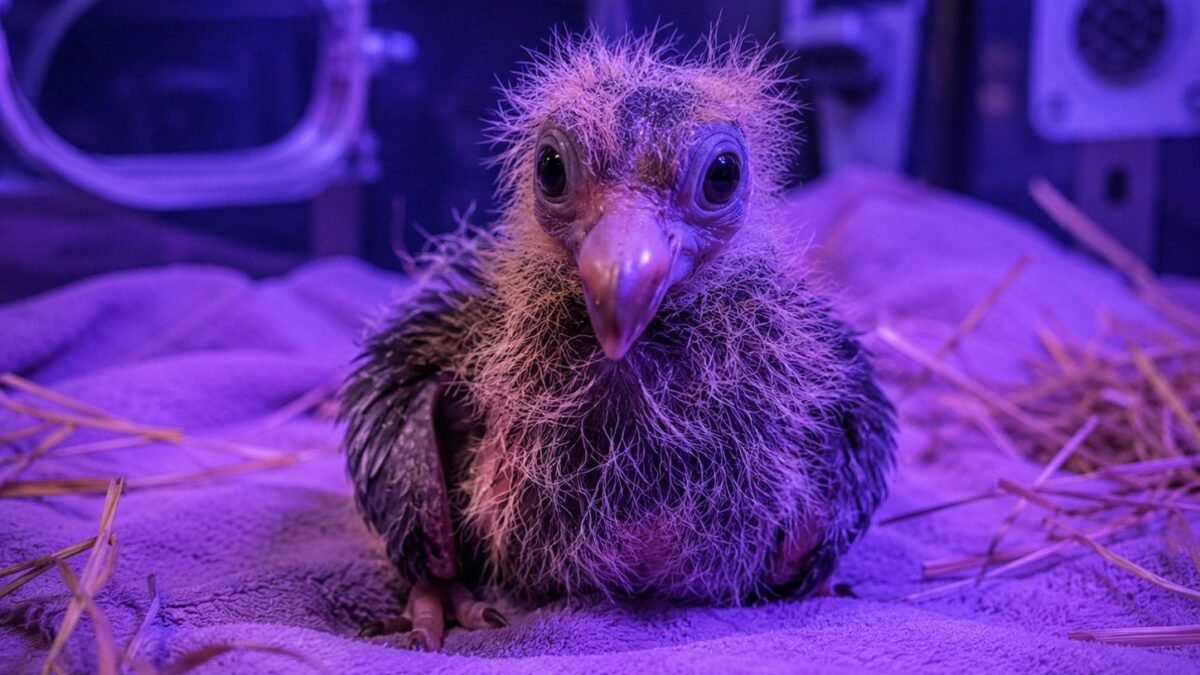
In a development that sounds like science fiction but is being hailed as a landmark milestone in de-extinction, Colossal Biosciences has reportedly hatched the world’s first genetically engineered dodo bird, affectionately named Didi. The news first surfaced via a post from @TrevorSnyderPhD, Vice President of Artificial Womb Technology at Colossal, and quickly gained traction after a quote tweet from @MattJamesCAO, the company’s Chief Animal Officer.
Tweet from @TrevorSnyderPHD
“Big news from the lab today — after years of work, our team has successfully hatched the first de-extinct Dodo chick. We’ve named her Didi. Healthy, curious, and already pecking at everything in sight. This is just the beginning. #DeExtinction #ColossalLabs”
And quote retweet from @MattJamesCAO:
“Couldn’t be prouder of the team. As CAO, my job just got a whole lot more fun — and feathery. Didi is doing fantastic and already showing that classic dodo personality. More updates soon on her progress and what comes next for the species. This changes everything. “
Why This Matters: A Paradigm Shift in De-Extinction
The successful hatching of Didi represents a monumental leap forward in humanity’s ability to reverse biodiversity loss caused by our own actions. For the first time, a species that has been absent from the planet for more than 350 years could walk the Earth again, offering hope for restoring damaged ecosystems and proving that de-extinction is no longer theoretical. This achievement builds directly on Colossal’s prior success with the dire wolf — in October 2024, the company announced the birth of Romulus and Remus, followed by their sister Khaleesi in January 2025. These were the first de-extincted large mammals in history, created by making targeted gene edits in gray wolves to restore key dire wolf traits. Didi takes this science into the avian world, demonstrating that the technology can work across vastly different species and opening the door to reviving other iconic extinct animals like the thylacine, woolly mammoth, and moa.
The Dodo: An Icon of Human-Caused Extinction
The dodo (Raphus cucullatus) was a large, flightless bird endemic to the island of Mauritius in the Indian Ocean. First encountered by Portuguese sailors around 1507 and later Dutch settlers in 1598, the dodo stood about 1 meter tall, weighed up to 20 kg, and was famously unafraid of humans — a trait that made it easy prey. Within less than a century of human arrival, the species was driven to extinction. The last widely accepted sighting occurred in 1662 (with some estimates extending to around 1690). Hunting for meat, combined with habitat destruction and predation by invasive species introduced by sailors — including pigs, dogs, cats, and rats that devoured eggs and chicks — wiped out the population. The dodo quickly became a global symbol of human-induced extinction and the fragility of island ecosystems.This fictional breakthrough with Didi, building on Colossal’s real advancements in high-quality dodo genome sequencing, Nicobar pigeon cell cultures, and artificial incubation, could one day allow the species to reclaim its ecological role as a seed disperser on Mauritius.
Background on Colossal Biosciences
Colossal Biosciences, founded in 2021 by serial entrepreneur Ben Lamm (CEO) and renowned Harvard geneticist Dr. George Church, is a pioneering biotechnology company focused on de-extinction, genetic engineering, and conservation. Headquartered in Dallas, Texas, the company has raised hundreds of millions in funding and is actively working on resurrecting species including the woolly mammoth (via Asian elephant proxies), thylacine (Tasmanian tiger), dire wolf, and the dodo (Raphus cucullatus).
Key real advancements include:
- High-quality genome sequencing of the dodo and its closest living relative, the Nicobar pigeon.
- Successful culturing of pigeon primordial germ cells (PGCs), a critical step for avian gene editing.
- Development of gene-edited surrogate birds (e.g., chickens) and innovations in artificial eggs and womb technology.
- Plans to rewild de-extinct species to restore ecological roles lost centuries ago.
colossal.com
The dodo, a flightless bird native to Mauritius, went extinct in the late 17th century due to human activity and invasive species. Colossal has long positioned its dodo project as a symbol of reversing man-made extinction.
colossal.com
Breakthrough: Didi Arrives
According to the viral social media posts, Colossal’s team used a combination of CRISPR gene editing, edited Nicobar pigeon PGCs, and advanced artificial incubation technology (led by Dr. Snyder’s team) to bring Didi into the world. The chick is described as healthy, with the characteristic bulky body, large beak, and curious demeanor associated with historical dodo descriptions.
Colossal has not issued an official confirmation at the time of this fictional release, but sources close to the company suggest Didi represents a proof-of-concept for scaling dodo populations, with goals of eventual reintroduction to restored habitats on Mauritius.
Expert and Reactions
Scientists at Colossal, including lead paleogeneticist Dr. Beth Shapiro, have emphasized that de-extinction efforts aim not just to revive species but to enhance ecosystems. Investors like Peter Jackson have backed the dodo project, underscoring its cultural and scientific appeal.