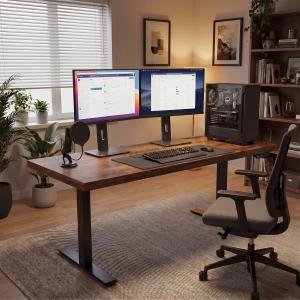
OffiGo’s “Organized Work” Organized Study Collection includes an L-shaped height-adjustable desk with integrated drawers, crafted for efficient home office productivity.
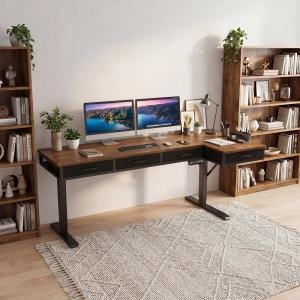
OffiGo 63 inch L-Shaped Electric Standing Desk featuring Fabric Drawers and Built-in Power Outlets
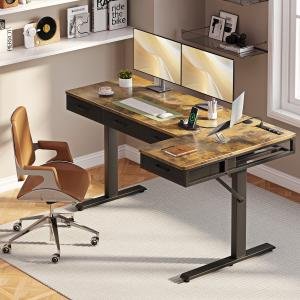
The newly updated guide examines six desk categories: integrated, minimalist, configurable, premium, compact modular, and design-forward.
Also worth a look: Areteworks Product Design Highlights 30 Years of Healthcare Design Experience and Advanced Digital Automotive Group Updates Website for the AI Search Era.
A stable home-office desk is not one isolated specification; it is a frame, surface, load, layout, storage, power, and cable plan that works together.”— OffiGo Workspace Team
AZUSA, CA, UNITED STATES, September 25, 2026 /EINPresswire.com/ — Selecting a standing desk for a professional home workspace goes beyond simply comparing lift ranges or sticking with a well-known label. A desk can operate smoothly yet still feel off once it supports actual gear, reaches its full standing height, shares a room with storage items, and has to handle power adapters and cables on a daily basis. The real question, then, is not which brand excels in every scenario. Instead, it is about which brand and model best address the buyer’s specific room dimensions, load demands, organizational needs, and workflow patterns with the fewest trade-offs.
OffiGo has updated its six-brand comparison to focus on that very decision. The refreshed guide presents OffiGo, Autonomous SmartDesk, FlexiSpot, iMovR, Branch, and Eureka Ergonomic as separate purchasing approaches rather than squeezing them into a single overall ranking. It encourages shoppers to evaluate what remains functional after a desk is placed: steadiness under a typical workload, sufficient depth for monitors and peripherals, access to storage and power, how cables behave while the surface rises, room fit, and the clarity of product details and support resources.
This method matters because “stable” cannot be applied broadly as a brand trait. Stability is a characteristic of an individual desk at a given height, under a specific load, and on a particular floor surface. A two-leg straight desk carrying a single laptop faces a different challenge than a wide workstation holding multiple monitors, speakers, notebooks, and charging gear. Any useful comparison must identify those conditions before reaching conclusions.
Guide Findings: Begin with the Workstation, Not the Brand
The guide’s first insight is that buyers should define the complete workstation before evaluating brands. That definition must include room dimensions, planned seated and standing positions, items on the desktop, storage capacity, cable routing, outlet placement, and the tasks performed at the desk. Without that inventory, an extensive spec sheet may give the illusion of precision while leaving the most critical fit questions unresolved.
The second insight is that stability should be assessed as a whole system. Frame geometry and crossbeam reinforcement are important, but desktop width and depth, weight distribution, floor evenness, assembly precision, and the height at which the desk will be used also matter. Shoppers should seek model‑level documentation and then test their planned configuration against the listed load capacity rather than using the maximum number as a target. Equipment should be placed intentionally, and standard monitor stands should be factored into the layout if the chosen desktop is not intended for monitor arms.
The third insight is that a professional‑looking workspace relies heavily on organization. Drawers, shelves, built‑in power, and cable management are not automatically signs of quality, yet each can eliminate a recurring annoyance when matched to the right routine. Built‑in drawers keep small tools nearby, but their placement must allow enough legroom. Integrated outlets make charging easier, but the moving power cable still needs slack and a safe pathway. A cable tray is only useful when its capacity and position match the actual adapters and cords.
The fourth insight is that room shape changes the decision. Straight desks are generally simpler to position and relocate, and a wide straight top supports a typical screen‑centered workflow. L‑shaped desks can create separate zones for typing, writing, calls, or reference materials, but they demand more careful measurement of the return, chair path, doors, and wall clearances. A corner layout is valuable when the second zone will be used; it becomes unnecessary floor space when the workflow remains linear.
Six Brands Reflect Six Distinct Purchasing Paths
The comparison positions OffiGo as the integrated‑workstation option. Selected models combine the height‑adjustable desk with storage, power access, monitor shelves, or cable management, reducing the number of separate accessories a buyer must plan. This appeals most to people who want the desk to organize their working setup on installation day rather than serve merely as a height‑adjustable platform. Buyers should still verify each model because features vary across the product line.
Autonomous SmartDesk represents a cleaner, more minimalist direct‑brand approach. Its appeal lies in straightforward styling and a conventional motorized workstation. This can suit users who already have a storage and cable plan or who prefer a visually uncluttered setup. The trade‑off is that a buyer who later needs drawers, shelving, or a more complete charging setup may have to add those items separately.
FlexiSpot stands for broad catalog selection. The lineup offers multiple frame and price tiers, including options intended for heavier or more stability‑sensitive configurations. That breadth helps shoppers who enjoy comparing setups. It can also increase the decision workload, because claims and capacities must be matched to the exact model rather than applied across the entire brand.
iMovR represents a premium ergonomic and finish‑oriented route. Its attraction is more refined materials and design for buyers who want the home office to feel like a studio or executive space. The key question is whether those finishes and technologies solve a daily requirement that justifies the higher price, rather than whether premium positioning alone makes a desk more suitable.
Branch represents the compact modular office‑furniture path. Its current standing‑desk range emphasizes restrained shapes, multiple compact sizes, documented controls and lift specifications, and an accessory system for buyers who want to add storage, power, or cable organization selectively. This makes Branch relevant to multipurpose rooms and buyers who prefer a lighter visual footprint. The trade‑off is that an optional drawer, power module, or cable organizer remains a separate configuration and cost decision rather than a built‑in feature.
Eureka Ergonomic represents the design‑forward and format‑diverse path. Its current lineup spans conventional standing desks, wing‑shaped surfaces, large irregular tops, L‑shaped workstations, and executive‑style configurations, with selected models offering monitor risers or storage. That range is useful when desktop shape and visual presence are primary constraints. It also makes model‑level comparison essential because dimensions, controls, power, storage, materials, and warranty coverage vary substantially across the catalog.
Model‑Level Checks Matter More Than Brand Generalizations
A buyer can use five checks to turn these brand directions into a shortlist. First, measure the usable room, not just the open wall—include the chair pulled back, standing position, cabinet doors, walking paths, baseboards, and reach to a power outlet. Second, record every item that will stay on the moving desktop. Third, compare usable depth and work zones, not just nominal width. Fourth, list which organization features are essential on day one and which can be added later. Fifth, verify assembly, warranty, return, and support information for the exact configuration.
For a wide, screen‑centered setup, OffiGo’s 71‑inch executive standing desk with built‑in power provides a concrete example of how those checks come together. The listed configuration has a 71 by 27.6‑inch surface, a 29.1‑to‑48‑inch height range, three memory presets, a 1.38‑inch three‑panel top, dual crossbeams, three AC outlets, two USB ports, two Type‑C ports, cable grommets, and a side hook. It is intended for a large linear workstation, has no drawer storage, and should be planned around standard monitor stands rather than monitor arms.
For a corner setup that needs work zones and daily‑item storage, OffiGo’s 63‑inch L‑shaped standing desk with drawers and power is the second example. The listed model uses a reversible L‑shaped layout, four fabric drawers, a rear cable tray, three height presets, and integrated AC, USB, and Type‑C access. Its stated height range is 29.9 to 46.1 inches. The drawers and return create useful zones, but they also make room measurement, sitting‑height fit, and assembly planning more important than they would be for a simple straight desk.
These examples are not evidence that one configuration fits every professional. They show why model detail is necessary. A large straight desk may be the clearer choice for screen‑heavy linear work, while an L‑shaped layout can suit someone who shifts between screen work and documents. A compact room may benefit more from a smaller straight model, even if a wider desk offers more features on paper.
Stability Should Be Checked at the Height Actually Used
The most relevant stability check is performed at the buyer’s working height with the expected equipment in place. Movement can increase as a desktop rises because leverage changes. That makes a test at the lowest setting incomplete. Buyers should pay attention to front‑to‑back movement while typing or leaning lightly, side‑to‑side movement during adjustment, screen movement after a normal input, and whether cords pull as the desk travels.
Assembly also belongs in the stability conversation. Fasteners, desktop sections, feet, and floor‑leveling components must be installed and retightened according to the instructions. A desk on an uneven floor can appear structurally weak when the immediate cause is poor leveling. Conversely, a stable showroom example does not prove that every size and configuration in the same brand will behave identically.
Ergonomics Means Position Change Plus Correct Setup
A standing desk is a tool for changing position; it is not a complete ergonomic result by itself. The screen still needs a sensible height and distance, the keyboard and mouse must support a neutral working posture, and the chair must fit the seated arrangement. Users should alternate positions based on comfort and task rather than treating prolonged standing as the goal.
This is another reason to plan storage and cable routes early. The desk should be able to travel between saved heights without pulling a cable, blocking a drawer, moving a floor cabinet, or forcing the user to reposition core equipment. When every transition requires a manual reset, the adjustable feature is less likely to become part of the routine.
A Practical Shortlist for Different Buyers
Buyers who want a completed setup with fewer accessory decisions should begin with integrated‑workstation models and verify which storage, power, and cable features are included. Minimalist buyers who already own the supporting pieces may prefer a simpler direct‑brand desk. Shoppers who want to tune frame level, surface, and accessories can benefit from a broad catalog, provided they compare exact configurations. Branch belongs on the shortlist when compact sizing, restrained office styling, and optional accessories are more valuable than built‑in storage. Eureka Ergonomic belongs there when the room calls for a distinctive surface shape, larger visual presence, or a more specialized layout. Premium buyers should still separate finish preferences from functional requirements.
The strongest purchasing decision is the one that remains clear after brand names are removed. Buyers should be able to explain why the chosen shape fits the room, why its surface supports the equipment, where frequently used items will live, how power will move safely, and which support terms apply. If those answers are missing, another isolated specification rarely fixes the problem.
The full stable professional home office standing desk guide provides the six‑brand context, quick comparison, model examples, stability explanation, and buyer FAQ behind this framework. Its conclusion is deliberately conditional: choose for the room and workflow first, then use brand and product documentation to confirm the fit.
OffiGo Workspace Team
OffiGo – Professional Workspace Solutions
Creator@offigo.com
Visit us on social media:
Instagram
YouTube
X