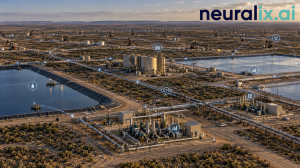
Industrial AI platform targets energy use, infrastructure performance and operating costs across produced water gathering, recycling, treatment and disposal.
The infrastructure and operational data already exist. The next step is using that information more intelligently to improve the economics and efficiency of the entire water lifecycle.”— Vikram Jayaram, Founder & CEO, NeuralixHOUSTON, TX, UNITED STATES, September 25, 2026 /EINPresswire.com/ — The Permian Basin is producing more than oil and gas. The basin averaged about 6.6 million barrels of crude per day in 2025, nearly half of U.S. output. Alongside that oil, operators now manage roughly 22 million barrels of produced water every day, about three to four barrels for every barrel of oil. Water volumes have more than tripled since 2017 and are expected to climb about 39% more by 2035, making produced water a significant operational and infrastructure challenge for the basin. Handling that volume requires an extensive network of pipelines, pumps, storage facilities, recycling infrastructure and disposal wells. Water must be moved reliably, equipment availability maintained, energy consumption managed and changing operating conditions addressed. At this scale, incremental inefficiencies can translate into substantial operating costs.
The growing volume of produced water is also creating greater demand for technologies that can help operators understand and optimize the performance of the broader water system. Most operators already generate significant amounts of operational information through SCADA systems, historians, sensors, meters and equipment controls. The challenge is converting that information into operating decisions. A pump can remain operational while gradually losing efficiency. Changes in pressure or flow can indicate developing leaks or other abnormal conditions. Assets performing similar functions can consume different amounts of energy, while changes in upstream production can create constraints elsewhere in a water network. Across interconnected infrastructure, these individual equipment conditions become part of a broader system optimization problem.
Neuralix combines operational data, engineering principles and machine learning to analyze these relationships. Applications include equipment health monitoring, anomaly and leak detection, water movement forecasting, pump optimization and energy optimization. The technology is designed to work with existing SCADA, historian and operational systems rather than replace them. Neuralix has applied this approach to produced water operations in the Permian Basin. In one water midstream deployment, the first phase of work helped reduce operating cost per barrel by approximately 14%, followed by an approximately 12% improvement in energy performance during a subsequent phase.
The project incorporated time-series operational data with equipment and energy information to develop models of system performance. Electricity consumption, equipment specifications and operating histories, pump curves, failure events and variability in electricity pricing were incorporated to evaluate energy performance and identify opportunities for operational improvement. At scale, these improvements can translate into operating savings and greater visibility across water infrastructure. Earlier identification of abnormal conditions can help operating teams respond before problems escalate, while forecasting can provide additional time to manage changing water volumes and infrastructure constraints.
The industry's approach to produced water is also evolving. Recycling for reuse within oil and gas operations has expanded, while operators and technology providers continue to evaluate advanced treatment and beneficial reuse. At the same time, Texas regulators have introduced additional requirements for saltwater disposal in parts of the Permian and established pathways for evaluating beneficial reuse of treated produced water. Treatment introduces another set of operational variables. Produced water chemistry varies between sources and over time. Treatment facilities must manage changing inlet conditions, equipment performance and energy requirements while maintaining required water quality. The economics of treatment therefore depend not only on the treatment technology itself, but also on the efficiency of the surrounding operation. This creates a need for visibility into how water arrives at facilities, how its characteristics change, how equipment performs and how individual operating decisions affect the economics of the overall system.
The produced water lifecycle also begins upstream of gathering, treatment and disposal infrastructure. Hydraulic fracturing represents one of the largest uses of water in the Permian, and completion design influences subsequent flowback and produced water volumes. Neuralix is also working with pressure pumping service operators to characterize hydraulic fracturing operations using high-frequency frac fleet data. Data analyzed can include treating pressures, pumping rates, proppant and fluid volumes, and pump and engine performance. Models can then characterize stage execution, equipment behavior and variability between stages and wells. These applications are intended to help pressure pumping teams identify equipment stress, evaluate operational consistency and recognize conditions that can contribute to non-productive time.
Completion operations also have implications for downstream water management. The amount of fluid pumped, operating rates and pressures, and formation response can influence the volume and timing of water returning from a well. Connecting completion information with gathering, recycling, treatment and disposal data can provide water operators with additional visibility into expected network conditions. The relationship becomes increasingly important as recycled produced water is used as source water for subsequent completion operations. As a result, management of the Permian water lifecycle increasingly spans the full chain from water sourcing and completions through flowback, gathering, recycling, disposal, advanced treatment and desalination.
Industrial AI applications in these environments must also account for physical operating constraints. Neuralix's approach combines machine learning with engineering and first-principles models so that analytics remain connected to equipment and process behavior. The systems are designed to integrate with existing operational infrastructure and provide information that engineering and operations teams can evaluate within established workflows. Produced water management in the Permian involves producers, water midstream operators, pressure pumping companies, treatment providers, regulators and technology companies. Continued growth in water volumes, recycling and treatment is increasing the importance of operational efficiency and coordination across those parts of the water lifecycle.
The Permian has spent years building infrastructure capable of managing produced water at significant scale. The next phase is increasingly focused on improving how that infrastructure is operated, how efficiently energy and equipment are used, and how existing operational data can support decisions across the water lifecycle.
Annorah Lewis
Neuralix Inc.
email us here
Visit us on social media:
LinkedIn