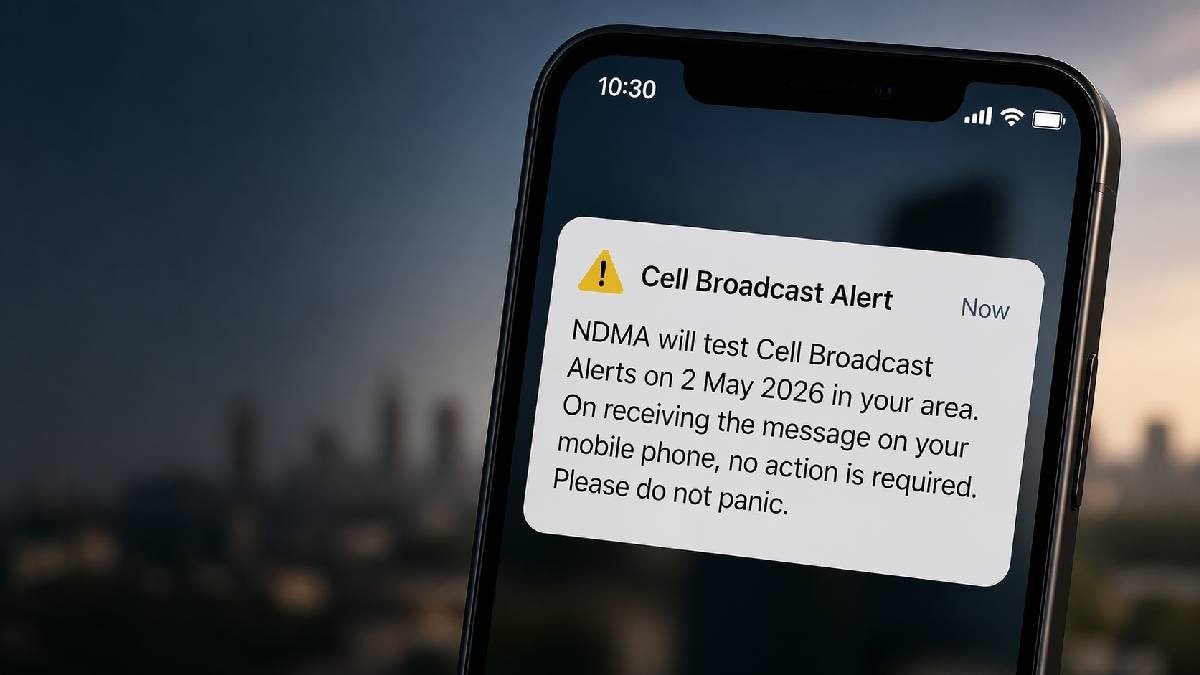
India has officially launched a nationwide, mobile-based emergency communication platform built entirely on indigenous technology. The Cell Broadcast system, unveiled on Saturday, will deliver instant emergency alerts straight to citizens’ mobile phones during natural disasters and other crises—an upgrade aimed at making last-mile warning delivery faster and more reliable.
An Indigenous Platform for Faster Public Alerts
The system was inaugurated on May 2 by Union Home Minister Amit Shah and Communications Minister Jyotiraditya Scindia, following weeks of country-wide testing during which millions of users received trial alerts on their phones. It was developed jointly by the Department of Telecommunications and the National Disaster Management Authority (NDMA), with the underlying technology engineered by the Centre for Development of Telematics (C-DOT), the government’s flagship telecom research arm.
To mark the rollout, test messages were broadcast to mobile users in every state capital, as well as Delhi and the wider NCR, in English, Hindi, and several regional languages. The message announced India’s launch of Cell Broadcast using homegrown technology, framed around the slogan of alerted citizens making for a safer nation.
How the Technology Works
The new platform sits at the heart of SACHET, an integrated alerting framework built around the Common Alerting Protocol recommended by the International Telecommunication Union. India’s existing SMS-based emergency system, which is already live across all 36 states and union territories, has reportedly delivered more than 134 billion alerts in over 19 languages during weather events, cyclones, and other emergencies.
The new Cell Broadcast layer pushes alerts to every mobile device inside a defined geographic zone at the same moment, sidestepping the network congestion that can choke regular SMS during a crisis. Unlike SMS, Cell Broadcast doesn’t require app installation or sign-ups—any handset that is powered on and connected to a mobile network will receive the warning automatically.
Built for Both Natural and Man-Made Emergencies
The platform is designed to handle a wide spectrum of emergencies, from earthquakes, tsunamis, cyclones, and lightning to man-made hazards such as gas leaks and chemical incidents. Its geo-targeting feature lets authorities send alerts only to users inside affected zones, rather than broadcasting indiscriminately to large regions.
Officials have highlighted that the system supports both smartphones and basic feature phones, an important consideration for reaching rural populations. Once it moves out of the testing phase, alerts will be delivered automatically during real emergencies, regardless of whether users have manually enabled test alert channels in their device settings.